
Underfloor heating
Drying UFH Screed Before Commissioning
Screed needs to reach a suitable condition before commissioning heat-up begins, distinct from the further drying often needed before sensitive floor coverings.
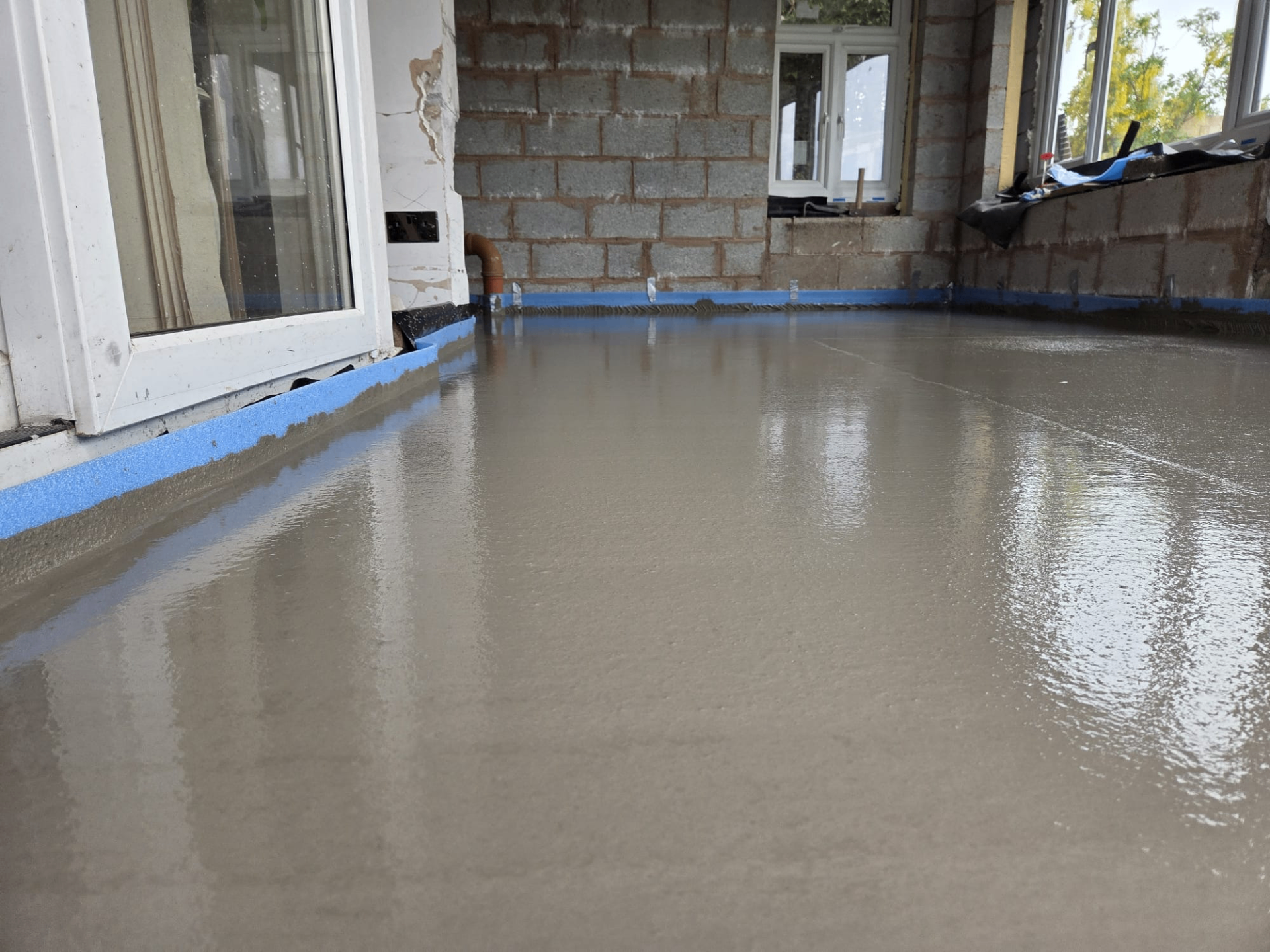
Before a UFH system can be commissioned, the screed generally needs time to cure and reach a condition suitable for controlled heating, following the manufacturer's guidance for the specific product used.
This period is often confused with the drying needed before laying floor coverings, but the two milestones are separate and shouldn't be assumed to happen on the same timeline.
Ambient site conditions have a real effect on this period: a well-ventilated, moderately warm site with some air movement across the floor will generally reach a suitable condition sooner than a sealed, cold or humid one, even with identical screed and depth. This is one reason drying timelines quoted for a product should be treated as a guide rather than a guarantee, with actual site conditions checked as the milestone approaches.
Drying Before Commissioning — the points that decide it
Why the timeline varies by project
Ambient temperature, humidity, ventilation and screed depth all influence how quickly a floor reaches a condition suitable for commissioning, which is why generic 'one number fits all' timelines aren't reliable. The manufacturer's datasheet for the specific screed used is the correct reference point.
Keeping commissioning and flooring timelines separate
It's tempting to assume that once a floor can be safely commissioned, it's also ready for flooring, but moisture content requirements for sensitive coverings such as engineered wood are usually stricter and need independent testing before the covering is laid.
Why published timeframes are a guide, not a guarantee
Manufacturer datasheets usually quote drying periods based on reference conditions — a specified temperature and humidity — that real sites don't always match. A cold, damp winter build will generally take longer to reach the same condition than a warm, well-ventilated summer one, even using an identical screed and depth.
Site conditions worth maintaining
Keeping windows or trickle vents open where possible, avoiding sealing the building up completely, and maintaining a reasonably consistent ambient temperature all support steady drying progress. Where a project's programme is tight, force drying or dehumidification is a more reliable way to manage the timeline than hoping ambient conditions cooperate.
Screed type and drying time differences
Anhydrite and cement-based screeds generally follow different drying characteristics, with anhydrite often reaching a suitable moisture condition over a longer natural period at typical depths, though depth, ventilation and site conditions all still apply on top of the underlying screed chemistry.
Rather than assuming one screed type is always faster to dry than another, the manufacturer's specific datasheet figures for the product and depth actually installed remain the reliable reference point.
Coordinating drying with other site trades
Other trades working on site during the drying period, such as plastering or painting, can add moisture to the air that slows the screed's own drying if ventilation isn't managed carefully, so sequencing wet trades away from the drying period where practical helps keep the programme on track.
Agreeing who is responsible for maintaining ventilation and background heat during this period, rather than leaving it to whichever trade happens to be present, avoids the drying programme quietly slipping without anyone noticing.
Programme your drying and commissioning
We'll help you plan realistic drying timescales into your build programme.
Or call our landline on 01392 237700
Drying Before Commissioning — your questions
In short
Screed needs to reach a suitable condition before commissioning heat-up begins, distinct from the further drying often needed before sensitive floor coverings.
Other pages that answer this properly
Programme your drying and commissioning
We'll help you plan realistic drying timescales into your build programme.