Substrates & Preparation
Waste and Washout Management on Liquid Screed Sites
A liquid screed pour generates washout water and some material waste that needs a sensible, pre-agreed disposal point rather than being dealt with on the fly.
Want to agree washout and waste arrangements before your pour?
We'll talk through a sensible washout and waste plan as part of scheduling your screed pour across Exeter and the South West.
Or call our landline on 01392 237700
Every liquid screed pour involves cleaning down the pump, hoses and mixing equipment afterwards, which produces washout water and some residual material. On most sites this is straightforward, but it's worth agreeing where washout will go and how any packaging or offcut waste will be handled before the pour, rather than working it out once the pump has arrived.
This isn't a complicated part of the job, but overlooking it can lead to washout ending up somewhere inconvenient — a drain that shouldn't take it, or a corner of the site that then needs clearing up separately from the main works.
Thinking through waste and washout at the same time as the rest of the site logistics, rather than as an afterthought once the pour is finished, tends to keep the pour day running smoothly and avoids an unplanned clean-up becoming the last job of the visit.
Why washout location matters
Liquid screed slurry, even at low volumes, can set hard if it isn't contained, and shouldn't be allowed into surface water drainage systems. Agreeing a specific washout area — a bunded pit, a spare skip, or a designated patch of hardstanding — before the pump arrives means the crew know exactly where to direct washout without needing to make a judgement call on site.
This is a small piece of planning but one that's easy to overlook amid the bigger logistics of getting the pour itself organised, and it's worth including as a line item on the same checklist used for access and site readiness.
General site waste from screed works
Beyond washout, a screed pour can generate some general waste — packaging, edge insulation offcuts, and DPM trimmings from the preparation stage. Where a site skip is already in place for the wider build this is usually straightforward, but on smaller domestic projects it's worth confirming where this waste should go before work starts.
Product packaging, particularly bags that have held additives or bonding agents, is worth disposing of according to the manufacturer's safety data sheet rather than treating it the same as general offcuts, since some materials have specific handling requirements even once empty.
Sites with limited waste infrastructure
Smaller domestic projects, or sites without an established skip already on the ground, sometimes don't have an obvious place for pump washout and general waste to go. In these cases it's worth agreeing a temporary arrangement specifically for the pour day — a contained area or a small dedicated bin — rather than leaving the crew to find a workable spot once they're already on site.
Where a client is managing waste arrangements themselves rather than through a main contractor, a short conversation ahead of the pour about what's needed avoids the washout question being left unresolved until the pump is already running.
Environmentally sensitive sites
Sites near watercourses, with private drainage systems, or subject to specific environmental conditions attached to a planning permission need washout arrangements considered more carefully than a standard domestic plot. In these cases it's worth raising the requirements with the screed contractor well ahead of the pour so a compliant washout method can be planned rather than adapted on the day.
Where there's any doubt about local drainage or environmental sensitivities, checking with the site's environmental consultant or the relevant local authority guidance before the pour date avoids an avoidable compliance issue after the event.
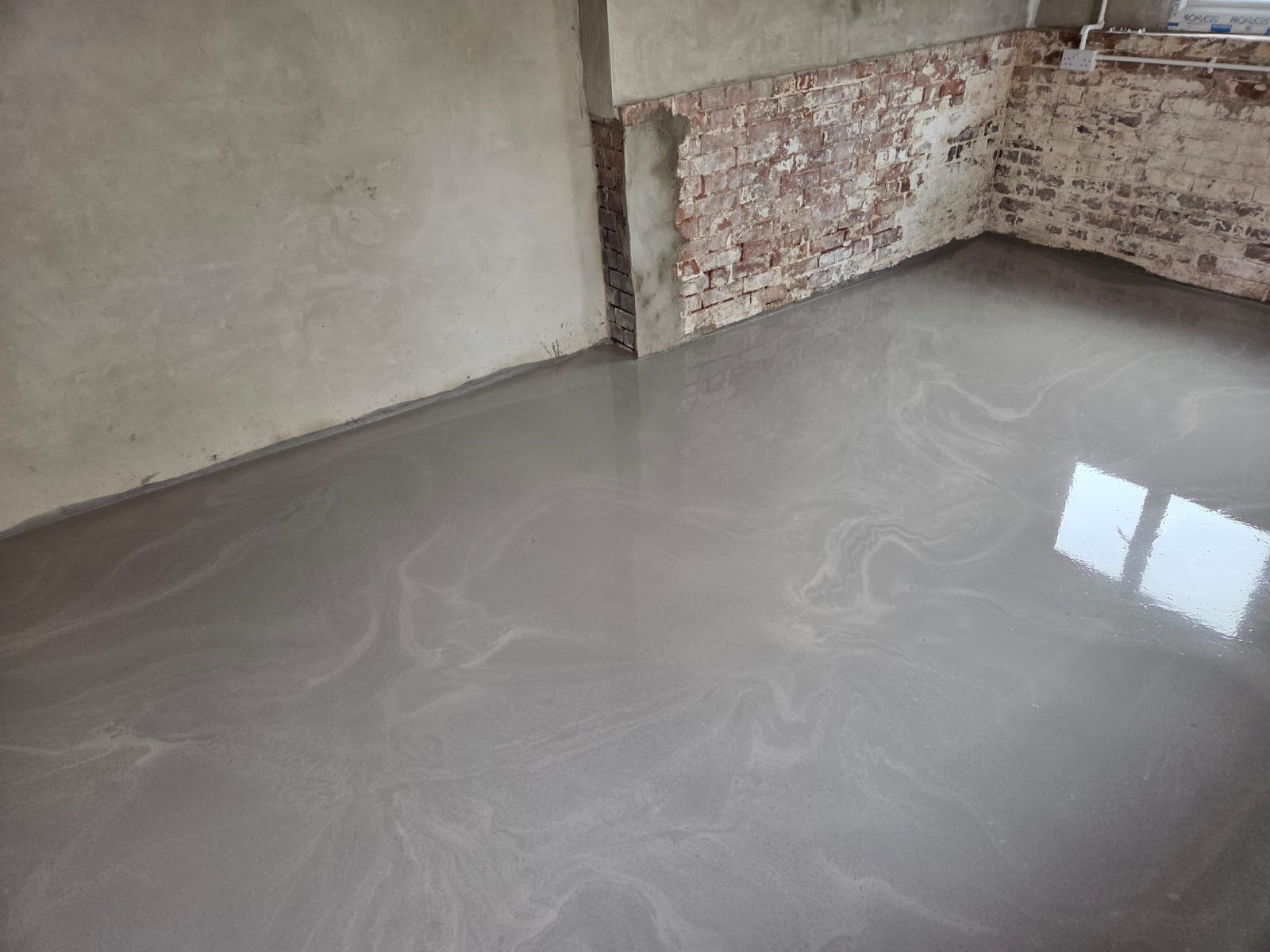
Waste & Washout Management — the points that decide it
- Pump and hose washout should go to a designated area agreed in advance, not directly into surface water drains
- A bunded or contained washout area, or a suitable waste bin/skip, avoids screed slurry setting where it isn't wanted
- Packaging from bagged additives, anhydrite or bonding agents should be disposed of according to the product's safety data sheet
- Any excess mixed material at the end of a pour is usually run out to waste in an agreed spot rather than left in the pump
- Site skips or waste areas should be positioned with the pump's access route in mind so washout doesn't need to travel far
- On environmentally sensitive sites — near watercourses or with specific drainage constraints — washout arrangements should be discussed with the client or site manager in advance
- Set or partially set screed waste is generally treated as inert construction waste, but local disposal arrangements can vary and are worth confirming
- A brief end-of-pour check that the washout area and skip have been used correctly, rather than assumed, closes off the last small risk of the day
Waste & Washout Management — your questions
Want to agree washout and waste arrangements before your pour?
We'll talk through a sensible washout and waste plan as part of scheduling your screed pour across Exeter and the South West.
Or call our landline on 01392 237700
In short
A liquid screed pour generates washout water and some material waste that needs a sensible, pre-agreed disposal point rather than being dealt with on the fly.
Want to agree washout and waste arrangements before your pour?
We'll talk through a sensible washout and waste plan as part of scheduling your screed pour across Exeter and the South West.