
Level and datum clauses
Specifying tolerances and datum for a liquid screed floor
Overall level tolerance against a fixed datum is a separate specification item from surface regularity and needs its own clear reference point and figure.
Need a datum and tolerance clause drafted?
We can help suggest workable datum and tolerance wording based on your project's floor coverings and layout.
Or call our landline on 01392 237700
Datum specifies the fixed reference level the finished floor should sit relative to, while tolerance describes the acceptable variation from that datum across the floor plate.
Without a clearly stated datum, disputes over whether a floor is 'level enough' become difficult to resolve, since there is no fixed point of reference to measure against.
Because datum and tolerance answer different questions — where the floor should sit, and how much it may vary — the specification should fix a physical reference point on site before survey figures are quoted against it.
Tolerances and datum — the points that decide it
- A physical, unambiguous datum point should be established on site and referenced on the drawings before the screed is poured.
- Tolerance should be expressed as a permitted deviation from that datum across defined survey points or a grid.
- Doorway thresholds, changes of covering and level-critical junctions often need a tighter local tolerance than the general floor area.
- Where multiple contractors are working from different assumed datums, confusion at handover is common; a single agreed datum avoids this.
- Tolerance and surface regularity are not the same thing and both should be addressed separately in the specification.
Setting a workable datum
The datum is usually tied to a fixed, durable reference point, such as a DPC line or a surveyed benchmark, and should be clearly marked and communicated to everyone working on the floor, including the screed installer, so measurements taken on different days are comparable.
Where tighter tolerances are worth specifying
Thresholds, changes between floor coverings, and areas with accessibility requirements often justify a tighter tolerance than the general floor area, since small level differences are much more noticeable and problematic at these transition points.
Vapour control and the agreed datum
A datum survey means little if rising moisture through an unmanaged base is later found to have distorted the finished level.
Insulation of limited compressive strength can itself distort under load if vapour trapped beneath it isn't given a path to escape.
Evidence supporting the agreed datum
A warranty claim tied to level defects will usually ask for the datum records, so these should be kept alongside the standard warranty paperwork.
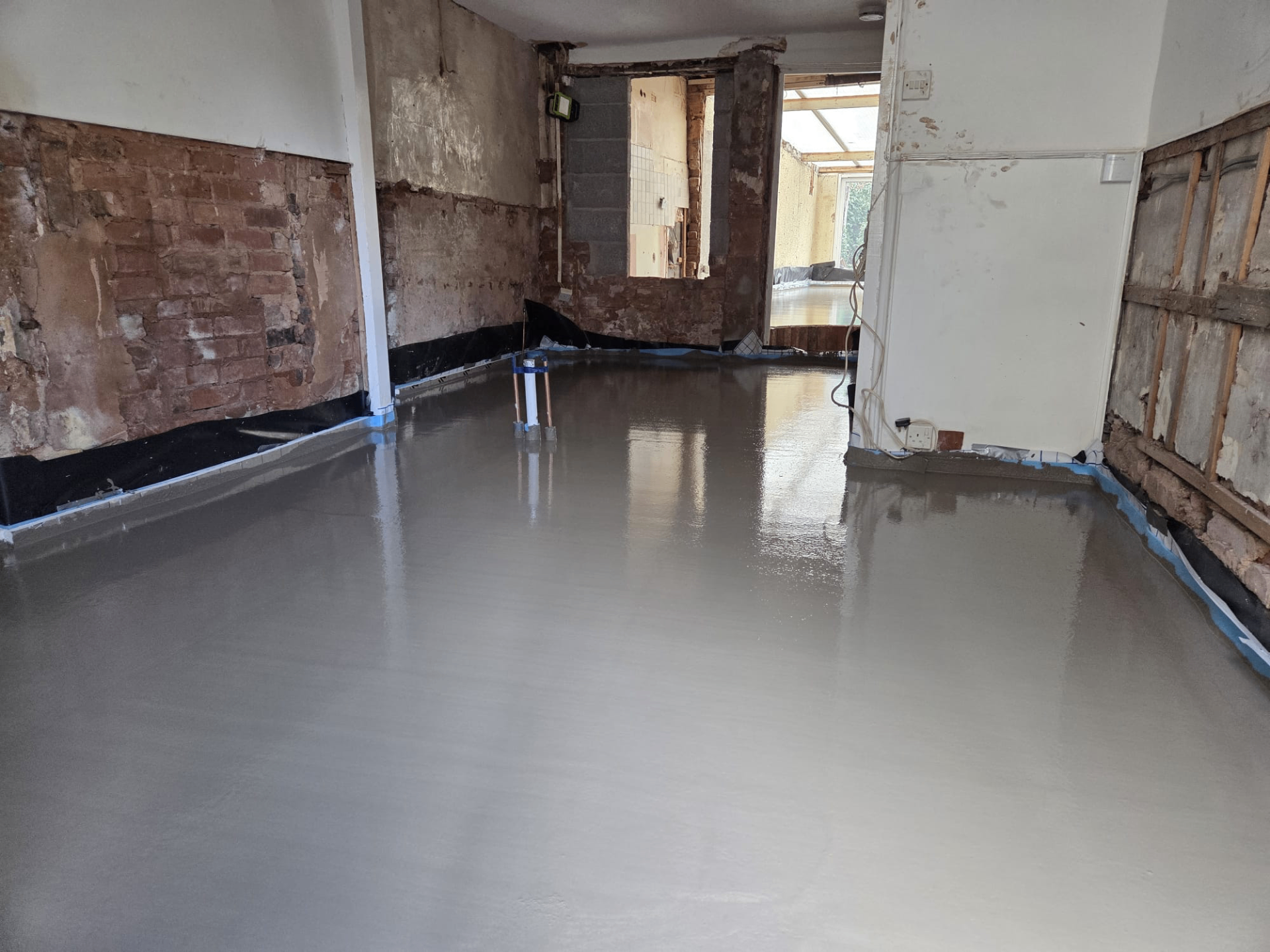
Photographs taken at the agreed datum point, alongside dated survey readings, give a traceable record if the level is later queried.
Datum sign-off and the drying programme
A datum agreed after the pour has already started leaves no way to check whether the finished level actually matches what was intended.
Whoever checks the datum on the day of the pour should also be named as responsible for confirming it again before flooring begins.
Need a datum and tolerance clause drafted?
We can help suggest workable datum and tolerance wording based on your project's floor coverings and layout.
Or call our landline on 01392 237700
Tolerances and datum — your questions
In short
Overall level tolerance against a fixed datum is a separate specification item from surface regularity and needs its own clear reference point and figure.
Need a datum and tolerance clause drafted?
We can help suggest workable datum and tolerance wording based on your project's floor coverings and layout.