
Access & pumping logistics
Pumping Liquid Screed Over Long Hose Runs
The pump stays on the road. The screed travels through the house, up the stairwell or across the garden — often 100m or more from the mixer.
Tell us about your access problem
Name, phone, email — we'll reply the same working day with a fixed price.
Or call our landline on 01392 237700
Not every site has a driveway that gets a screed truck within twenty metres of the pour. Terraces, courtyard developments and rural plots with a single narrow access track are the norm across much of Exeter, Devon and Somerset, and liquid screed's biggest practical advantage is that it doesn't actually care.
Because it's pumped rather than barrowed, the mixer can sit wherever it physically fits — the road, a neighbouring field, even a car park two properties down — and the hose does the rest of the journey. We routinely run 80–150m of hose through a house, round two corners and up a flight of stairs without losing flow or consistency.
This page covers what actually limits a long pump run, how we plan for it on a survey, and what we need from you before pour day.
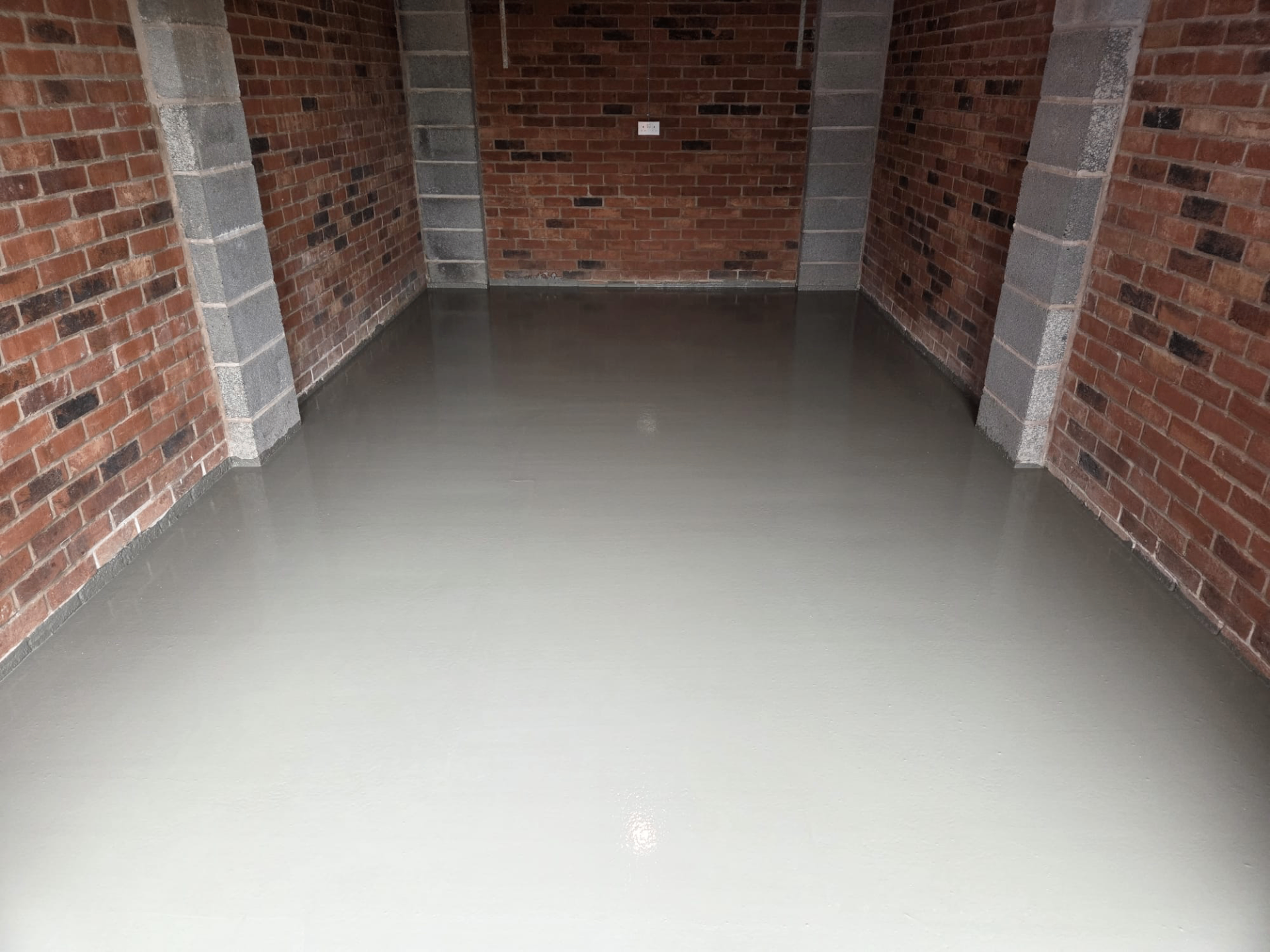
What a typical long-run pour looks like
up to 150m
Standard hose run
up to 3 storeys
Vertical lift
50mm flexible
Hose diameter
constant, no segregation
Flow rate maintained
What actually limits a pump run
Distance alone rarely stops us — these are the real constraints:
- Tight bends stacked close together, which increase friction loss faster than distance does
- Vertical lift combined with horizontal distance — going up costs more pump pressure than going along
- Doorway and stairwell widths for physically routing the hose
- Ambient temperature on the day — cold slows the mix and increases the risk of a stalled line
- Access for the mixer lorry itself, even if it's parked well away from the pour
How we plan a difficult access pour
- 1
Site walk
We measure the actual hose route, not just straight-line distance — every doorway, corner and step counts.
- 2
Pump placement
We identify where the mixer can legally and physically park, even if that's a road closure or neighbour's yard.
- 3
Route protection
Boarding and dust sheets go down along the hose path through finished or part-finished rooms.
- 4
Test pump
A short test run confirms flow before we commit to the full pour volume.
- 5
Continuous pour
The pour runs as one continuous operation — stopping and restarting mid-hose on a long run risks a blockage.
Tell us about your access problem
Describe the site — narrow lane, no driveway, upstairs pour, whatever it is — and we'll tell you honestly whether it's a straightforward pump or needs extra planning.
Or call our landline on 01392 237700
We've pumped screed further than most trucks can barrow it in a day. The thing that actually stops a job isn't distance — it's whether the mixer lorry can get parked somewhere legal in the first place.
— Exeter Liquid Screeders
Long Hose Runs — questions we get asked
Keep reading across the site
Tell us about your access problem
Describe the site — narrow lane, no driveway, upstairs pour, whatever it is — and we'll tell you honestly whether it's a straightforward pump or needs extra planning.