Flatness standards
Understanding Floor Levelling Tolerances for Screed
"Level" isn't a single standard. SR1, SR2 and specific finish requirements each mean something different, and getting the wrong one specified causes real problems downstream.
Confirm the right tolerance for your finish
Name, phone, email — we'll reply the same working day with a fixed price.
Or call our landline on 01392 237700
Flatness tolerance is one of those specification details that sounds like small print until a large-format porcelain tile won't sit flush, or an LVT plank telegraphs every dip in the substrate below it. Getting the tolerance right at the screed stage avoids both.
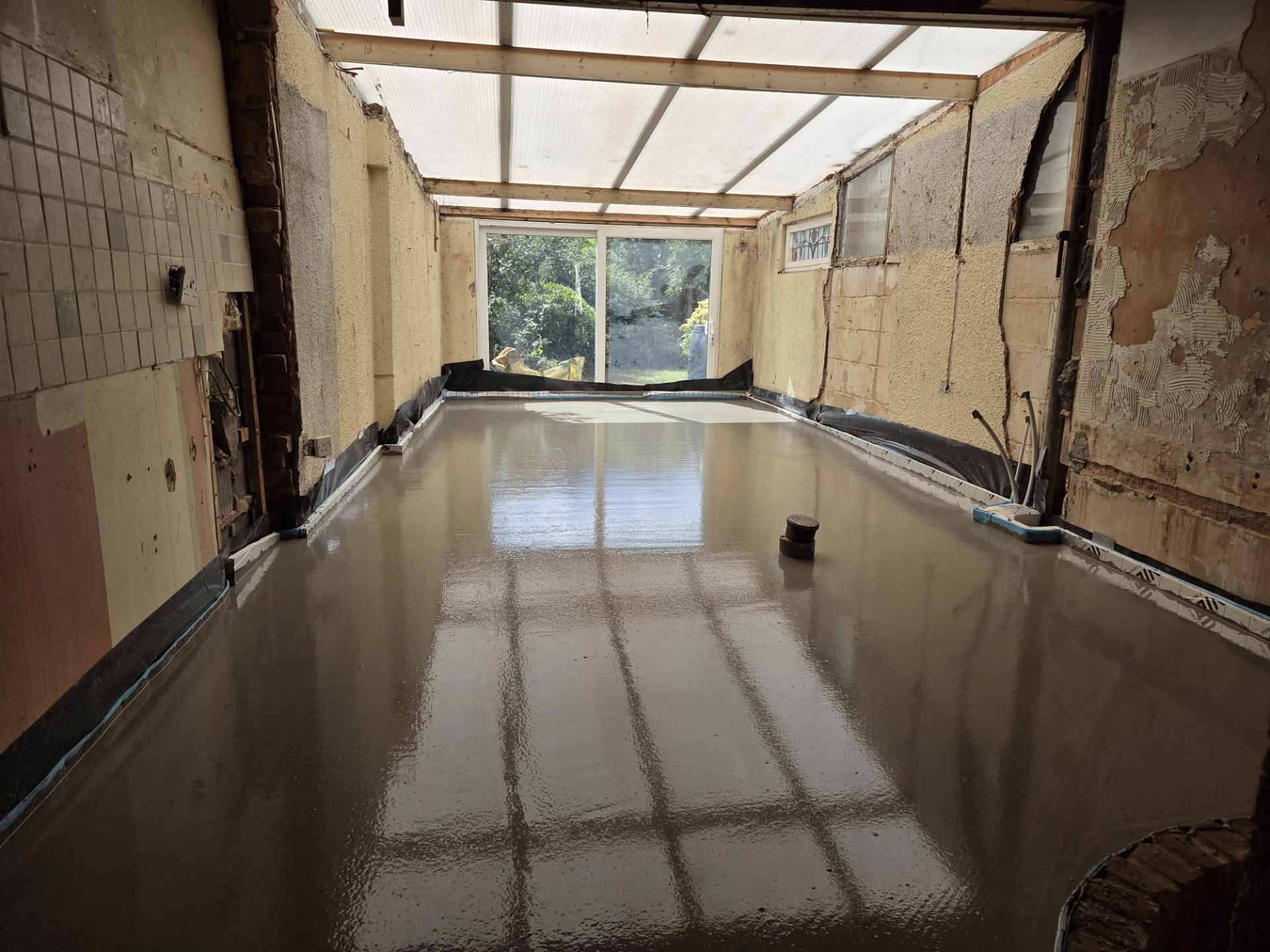
The UK screed industry classifies flatness using SR (Surface Regularity) categories, measured with a straightedge over a 2-metre span. Liquid, self-levelling screeds routinely achieve SR1, the tightest classification, which is one of their core advantages over hand-laid sand-and-cement.
This page explains what the classifications actually mean, which finishes need which tolerance, and how we verify flatness before handing a floor over.
SR classifications explained
| Classification | Maximum deviation over 2m |
|---|---|
| SR1 | ±3mm (typically achieved as ±2mm with liquid screed) |
| SR2 | ±5mm |
| SR3 | ±10mm |
Which finish needs which tolerance
- Large-format porcelain (600mm+) — SR1, tight tolerance is essential to avoid lippage
- Standard ceramic tile — SR1 preferred, SR2 workable with extra adhesive bed adjustment
- LVT and vinyl — SR1, since thin coverings show every substrate imperfection
- Engineered wood on underlay — SR2 generally acceptable, underlay absorbs minor variation
- Carpet — SR2 or SR3 usually sufficient, underlay and pile mask small deviations
How we verify flatness before sign-off
- 1
Straightedge survey
A 2m straightedge is walked across the floor in multiple directions once the screed has fully dried.
- 2
Deviation measurement
Gaps under the straightedge are measured with feeler gauges at regular intervals.
- 3
Grid recording
Results are recorded against a floor grid so any localised high or low spots are documented, not just an average.
- 4
Snagging if needed
Any area outside the specified tolerance is ground down or locally levelled before handover.
Confirm the right tolerance for your finish
Tell us your floor covering and we'll confirm the flatness classification we'll pour and verify to.
Or call our landline on 01392 237700
A 5mm dip is invisible under carpet and obvious under a 1200mm porcelain slab. The floor covering decides how tight the tolerance actually needs to be, not the screed on its own.
— Exeter Liquid Screeders
Levelling Tolerances — questions we get asked
Keep reading across the site
Confirm the right tolerance for your finish
Tell us your floor covering and we'll confirm the flatness classification we'll pour and verify to.