Screed Fault Diagnosis
Shrinkage Cracks in Liquid Screed
Fine shrinkage cracking is a normal part of how cementitious and calcium sulfate screeds dry, but pattern, width and location determine whether action is needed.
Not sure if your screed cracking is normal?
Call Exeter Liquid Screeders on 07791 510849 for a straightforward assessment of crack width, pattern and cause.
Or call our landline on 01392 237700
Quick answer: fine hairline cracks that appear while a screed dries and then stop growing are usually normal shrinkage, not failure. Cracks that are wider than a hairline, keep opening, or follow a pipe run, doorway or substrate joint point to a specific cause and should be investigated before any floor finish goes down.
All screeds shrink slightly as they dry and cure, and some degree of fine, random cracking is considered normal, particularly on larger bays without movement joints. The key question isn't whether cracking exists, but whether its width, pattern and location fall within acceptable tolerance for the floor finish that will go over it.
Shrinkage cracking differs from structural cracking caused by substrate movement or point loading in that it tends to be fine, randomly distributed, and stable once the screed has fully dried. Structural or movement-related cracks are usually wider, may still be moving, and often relate to a specific cause such as inadequate movement joints or substrate deflection.
Liquid screeds, whether calcium sulfate or cementitious, are formulated to reduce shrinkage compared with traditional sand:cement mixes, but they are not immune to it, especially on large open-plan floor areas poured without adequate joint provision.
Assessing crack width and stability
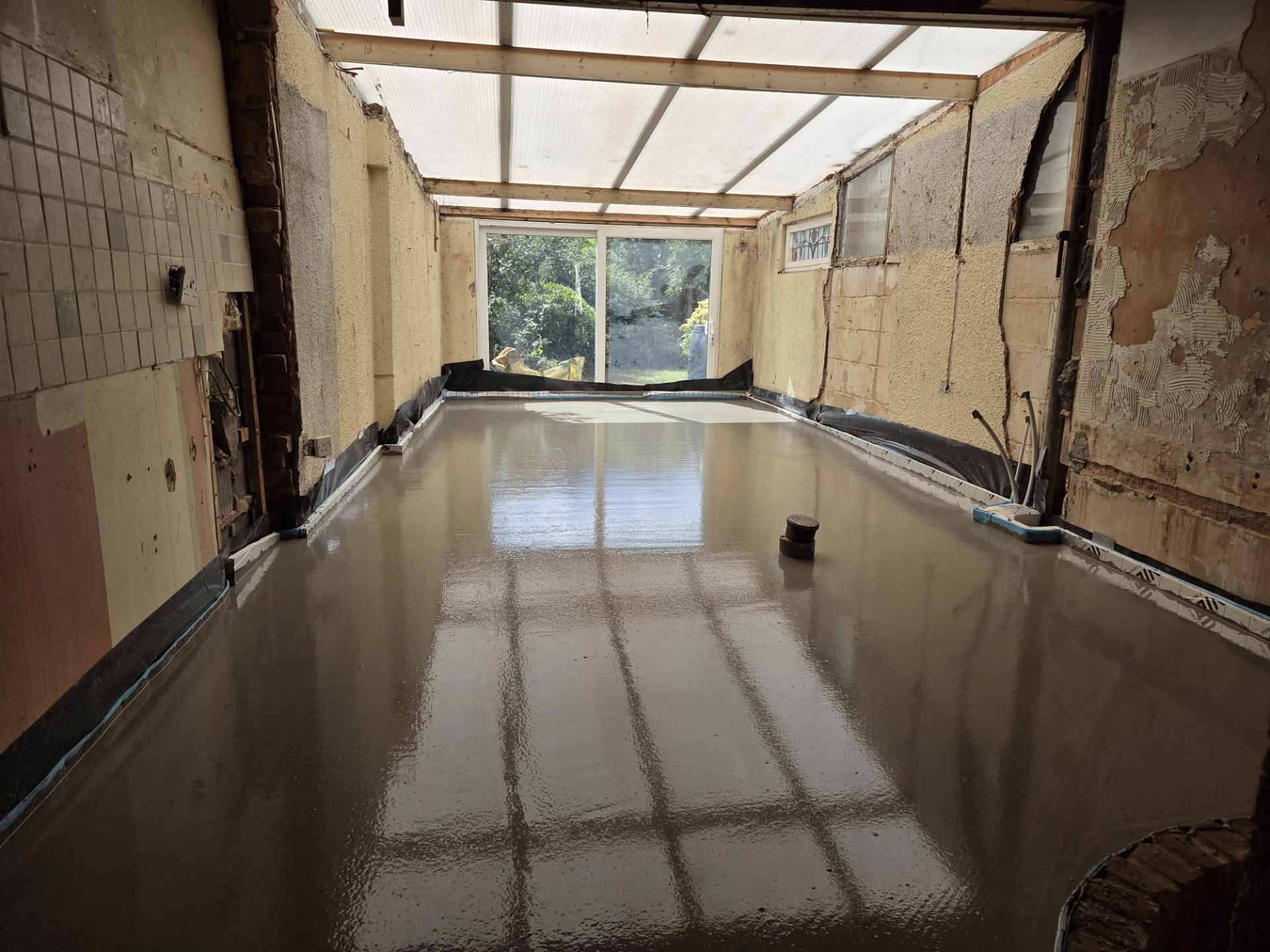
A simple way to judge a crack is to measure its width with a crack gauge and check, over a period of days to weeks, whether it is still widening. Genuinely stable, hairline shrinkage cracks are common and are frequently bridged with a flexible filler or crack-isolation membrane before tiling or resilient flooring.
Where a crack continues to open, or is wider than a hairline, it points to an ongoing cause — restraint, substrate movement, or an undersized bay — that should be identified before deciding on a repair method.
Reducing shrinkage cracking risk on future pours
Correct bay sizing and the inclusion of movement joints at appropriate centres, junctions and thresholds significantly reduces the likelihood of uncontrolled shrinkage cracking. Following a proper drying programme, avoiding rapid or uneven drying, also helps the screed shrink more evenly.
On liquid screed specifically, following the manufacturer's guidance on application thickness and curing conditions plays a part in keeping shrinkage within the expected range for the product.
Shrinkage Cracks in Liquid Screed — the points that decide it
- Fine, random shrinkage cracking is a normal characteristic of drying screed
- Crack width and stability (not mere presence) determine whether repair is needed
- Large bay sizes without movement or day joints increase shrinkage crack risk
- Liquid screeds generally shrink less than traditional sand:cement, but not to zero
- Cracks should be assessed once the screed has reached a stable, low moisture state
- Hairline cracks are often addressed cosmetically before resilient floor finishes
- Wider or moving cracks need investigation before any floor finish is installed
Not sure if your screed cracking is normal?
Call Exeter Liquid Screeders on 07791 510849 for a straightforward assessment of crack width, pattern and cause.
Or call our landline on 01392 237700
Shrinkage Cracks in Liquid Screed — your questions
In short
Fine shrinkage cracking is a normal part of how cementitious and calcium sulfate screeds dry, but pattern, width and location determine whether action is needed.
Not sure if your screed cracking is normal?
Call Exeter Liquid Screeders on 07791 510849 for a straightforward assessment of crack width, pattern and cause.