
Tiling
Tiling After Liquid Screed: The Timeline
Tiling straight onto liquid screed is routine — but skipping a step in the sequence is one of the most common causes of tile failure.
Plan your tiling handover
Name, phone, email — we'll reply the same working day with a fixed price.
Or call our landline on 01392 237700
Liquid screed and tile are a well-proven combination, and most floor tiling across the South West now goes down on a liquid screed base rather than traditional sand-and-cement. But the sequence between pour and tile matters — moisture testing, surface preparation (sanding, for anhydrite) and correct adhesive selection all need to happen in the right order.
Tilers who are used to working with liquid screed know this sequence well; those who aren't sometimes assume it behaves exactly like a traditional screed, which can lead to problems if a step is skipped.
Here's the realistic step-by-step timeline from pour to finished tile.
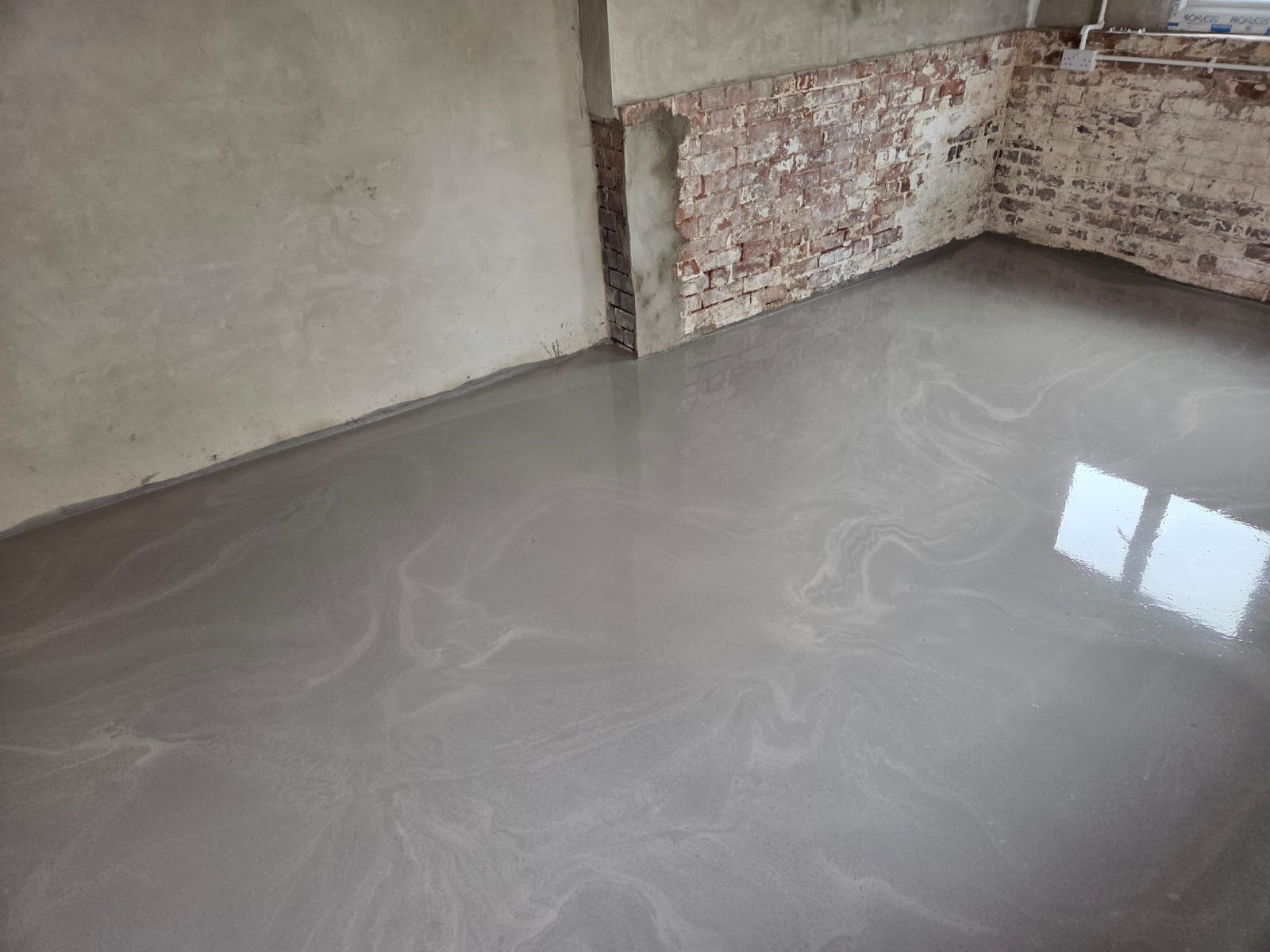
From pour to tile
- 1
Pour and initial cure
24–48 hours before any foot traffic, then controlled ambient drying begins.
- 2
Drying period
Days to weeks depending on screed type and depth — see our drying programme page.
- 3
Moisture test and handover
A confirmed dry result is issued in writing before any further prep begins.
- 4
Surface preparation
Anhydrite screeds need laitance sanding; cement-based screeds like Cemfloor typically don't.
- 5
Priming
A manufacturer-approved primer is applied to the prepared surface before tiling.
- 6
Tile adhesive and tiling
Correct flexible adhesive is selected for the screed type and tile format, and tiling proceeds as normal.
Cemfloor vs anhydrite before tiling
Cemfloor (cement-based)
- No mandatory laitance sanding for most mixes
- Compatible with standard tile adhesives after priming
- Cement chemistry suits wet-area tiling well
Anhydrite (Gyvlon / Gypsol)
- Laitance sanding required before tiling
- Needs a primer compatible with calcium-sulphate substrates
- Best avoided under tiling in true wet rooms
Plan your tiling handover
Tell us your tiling contractor's start date and we'll plan the drying, testing and prep sequence to hit it.
Or call our landline on 01392 237700
Why skipping the moisture test causes real problems
Tiling over a screed that's still holding excess moisture can trap that moisture beneath the tile, leading to adhesive failure, efflorescence, or tiles lifting months later — problems that are far more disruptive to fix than the short wait a proper test result requires.
It's a genuinely avoidable failure mode, which is why we won't hand a floor over for tiling without a written test result.
Tiling After Screed Timeline — questions we get asked
More on costs and planning
Keep reading across the site
Plan your tiling handover
Tell us your tiling contractor's start date and we'll plan the drying, testing and prep sequence to hit it.