Flatness tolerance compared
SR1 vs SR2 Screed Flatness Tolerance
SR1 and SR2 are the two flatness standards you'll see quoted, but they only matter in relation to what's actually going on top of the screed.
Confirm the flatness tolerance you need
Name, phone, email — we'll reply the same working day with a fixed price.
Or call our landline on 01392 237700
SR1 and SR2 describe how flat a screed surface is once it's cured, measured against a straight edge over a set distance. They're not a marketing term — they're a genuine, measurable tolerance that flooring manufacturers reference in their own installation guidance.
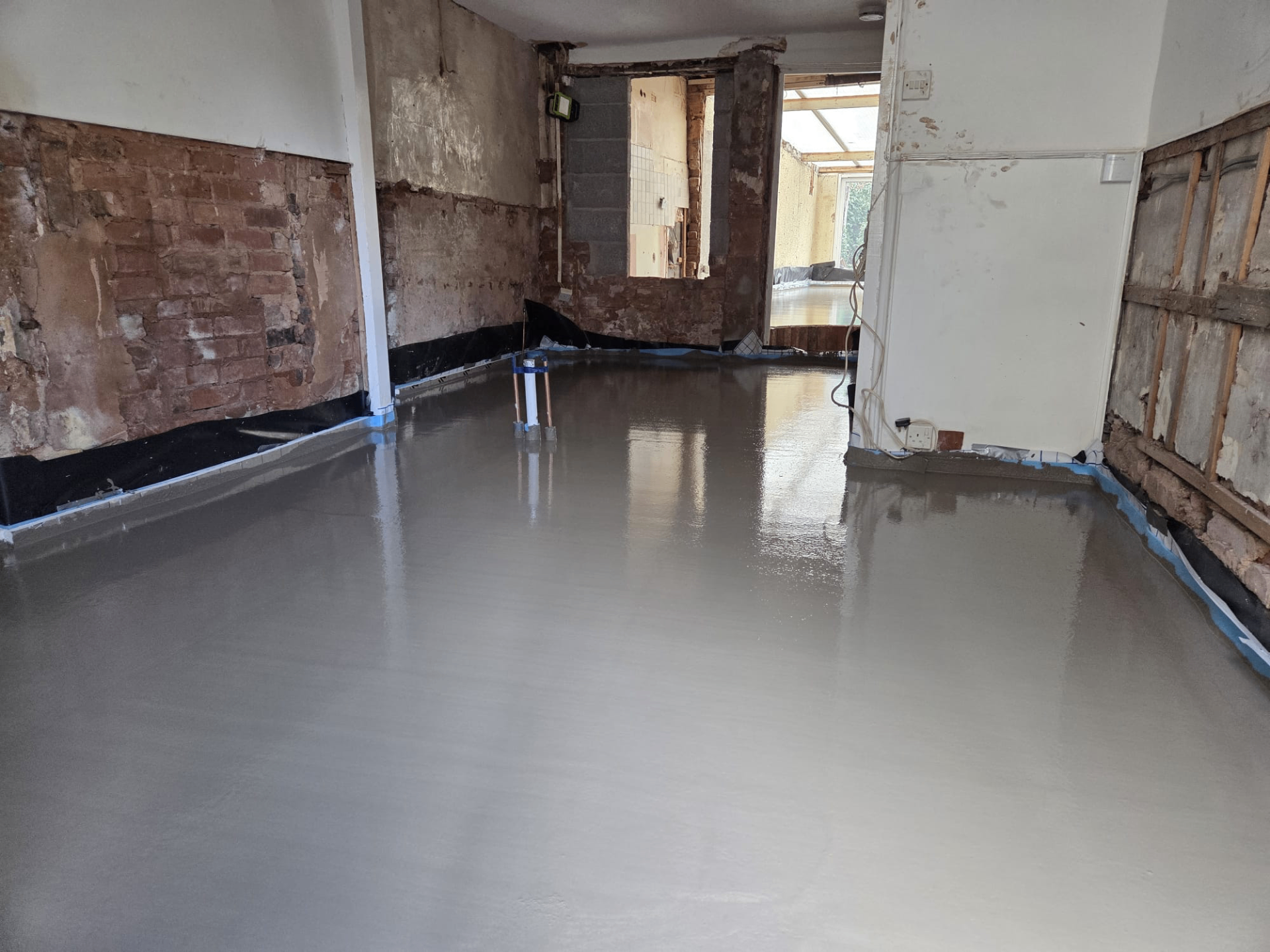
Liquid screed is capable of achieving SR1 as standard, which is part of why it's specified so often ahead of tiling or resin finishes. SR2 is a looser tolerance that's perfectly adequate for many floor coverings and is what traditional sand-and-cement typically achieves at best.
This page explains the practical difference and which finishes actually demand SR1.
SR1 vs SR2 defined
| Standard | Tolerance |
|---|---|
| SR1 | ±3mm gap under a 2m straight edge (often achieved tighter with liquid screed) |
| SR2 | ±5mm gap under a 2m straight edge |
Finishes that need SR1
- Large-format porcelain tiles (600mm+) where lippage becomes visible
- Polished or power-floated concrete finishes
- Resin and epoxy flooring in commercial units
- LVT and vinyl where subtle undulation telegraphs through thin coverings
Confirm the flatness tolerance you need
Tell us your floor covering and we'll confirm whether SR1 or SR2 applies and quote your pour accordingly.
Or call our landline on 01392 237700
Finishes where SR2 is generally acceptable
- Carpet and underlay, which absorb minor undulation
- Engineered wood floated over a foam layer
- Standard-size ceramic tile with a forgiving adhesive bed
- Smaller-format tiles less prone to visible lippage
SR1 wins whenever the floor covering is thin, large-format, or reflective enough to show every undulation. SR2 is perfectly adequate for carpet, floated wood floors and forgiving tile sizes, and specifying SR1 unnecessarily just adds cost. Test it against the flooring manufacturer's own installation tolerance, not a general preference for 'the best'.
— Exeter Liquid Screeders
SR1 vs SR2 Flatness — questions we get asked
Keep reading across the site
Confirm the flatness tolerance you need
Tell us your floor covering and we'll confirm whether SR1 or SR2 applies and quote your pour accordingly.