
Wet room screed compared
Gypsum vs Cement Screed in Wet Rooms
A wet room is exactly the environment where the difference between gypsum and cement screed chemistry stops being theoretical and starts being a maintenance risk.
Get your wet room screed specified correctly
Name, phone, email — we'll reply the same working day with a fixed price.
Or call our landline on 01392 237700
Wet rooms and en-suites put a floor under repeated, direct water exposure in a way most other rooms never experience — which makes the choice of screed chemistry underneath the tanking membrane genuinely consequential rather than a matter of preference.
Gypsum (calcium-sulphate) screeds are excellent in dry residential settings but are not designed for sustained moisture exposure, and their compatibility with cement-based tanking and adhesive systems needs careful management. Cement-based screeds like Cemfloor don't share that vulnerability.
This page sets out why we default to cement-based screed in wet areas and where gypsum can still be considered.
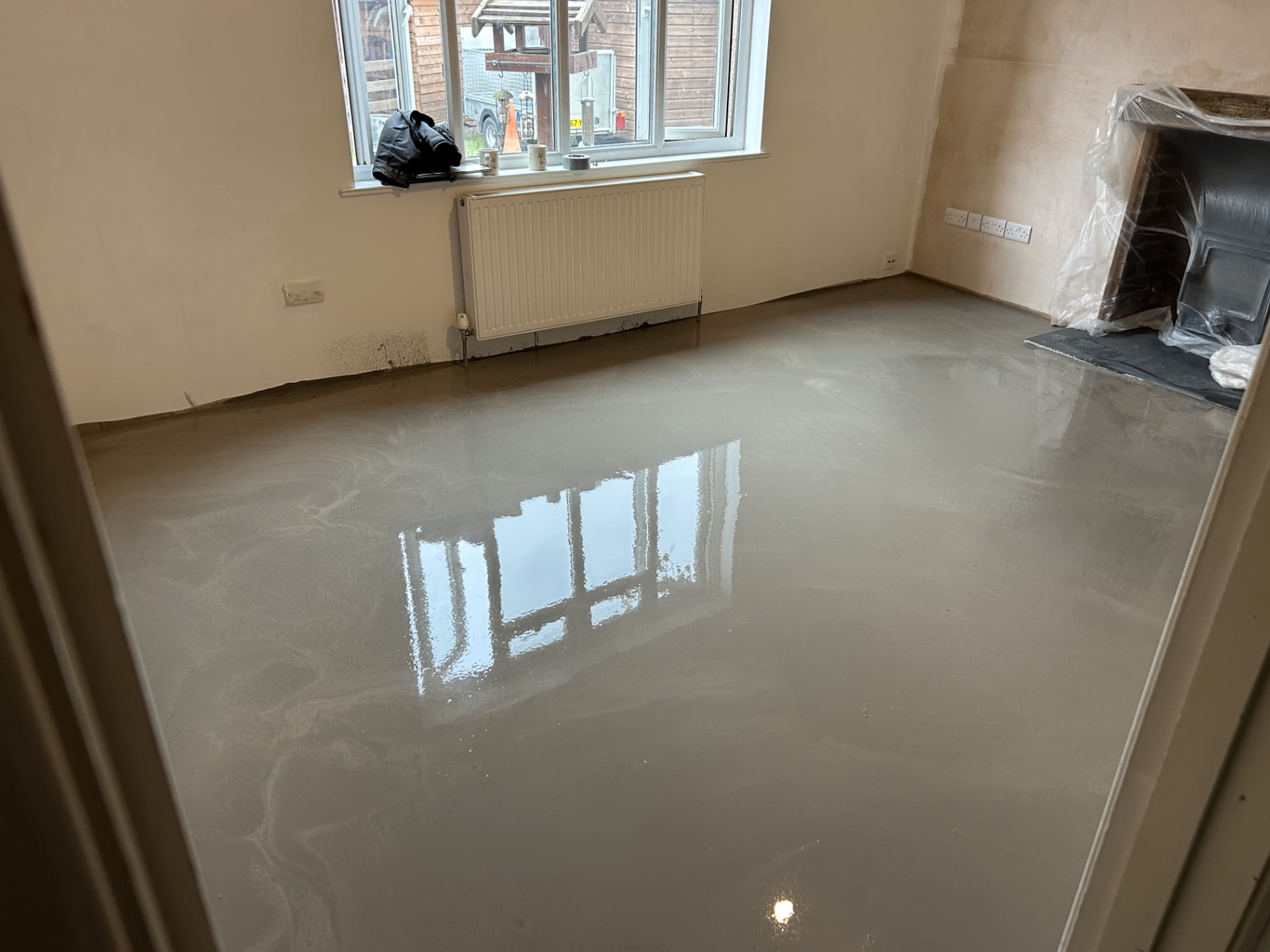
Gypsum vs cement screed for wet rooms
Cement-based screed (e.g. Cemfloor)
- Stable under repeated wetting
- Fully compatible with cement-based tanking and adhesives
- No isolating primer required before tiling
- Our default recommendation for wet rooms
Gypsum (anhydrite) screed
- Not designed for sustained moisture exposure
- Needs isolating primer under cement-based tanking systems
- Can degrade with recurring water ingress over time
- Suitable only where tanking is impeccable and exposure is minimal
Why exposure risk compounds over time
- Tanking membranes can fail at penetrations (waste pipes, shower trays) over years of use
- Grout and sealant joints degrade and allow gradual moisture ingress
- Gypsum's gradual weakening under repeated wetting is a slow, hidden process
- Remedial work on a failed wet room floor is disruptive and costly compared with getting the base right first
Practical comparison
| Factor | Cement screed vs gypsum screed |
|---|---|
| Moisture tolerance | High vs Low |
| Primer before tiling | Not required vs Required (isolating primer) |
| Long-term wet room suitability | Recommended vs Not recommended as standard |
| Cost | Comparable to slightly higher vs Slightly lower |
Get your wet room screed specified correctly
Tell us about your wet room or en-suite layout and we'll recommend the right screed chemistry and quote the pour.
Or call our landline on 01392 237700
Cement-based screed wins in wet rooms and en-suites in the overwhelming majority of cases — the moisture tolerance simply removes a long-term risk that isn't worth taking for a modest cost difference. Gypsum can be considered only where tanking is exemplary and exposure is genuinely minimal. Test it against how the room will actually be used, not how it's used on day one.
— Exeter Liquid Screeders
Gypsum vs Cement in Wet Rooms — questions we get asked
Keep reading across the site
Get your wet room screed specified correctly
Tell us about your wet room or en-suite layout and we'll recommend the right screed chemistry and quote the pour.