
Quality assurance
Specifying quality assurance checks and site records for liquid screed
A clear quality assurance clause sets out what records the screed contractor should provide, from batch and mix documentation to depth checks, so disputes later have an evidential basis.
Want a QA clause added to your specification?
We can talk through what records are proportionate for your project's scale and complexity.
Or call our landline on 01392 237700
Quality assurance for a liquid screed pour is often left implicit in a specification, with the assumption that the contractor will simply do the job properly, but a written record of what was actually delivered on the day is valuable if any question arises later about depth, mix or curing conditions.
This does not need to be an onerous bureaucratic exercise. A short list of records, such as delivery tickets, depth check points, ambient conditions on the day and any test results, gives both the client and the contractor an objective account of the pour that can be referred back to.
Specifying this at tender stage, rather than requesting it retrospectively once a concern has arisen, means the records exist as a matter of course rather than being reconstructed from memory after the event.
Why records matter more after the event
Most screed pours go without incident, and in those cases the records simply sit unused in a project file. Their value becomes apparent on the occasions where a query arises later, whether that is a cracking concern, a flooring installer questioning whether the floor was dry enough, or a dispute about whether the specified depth was achieved.
Without contemporaneous records, these questions rely on recollection and assumption, which rarely satisfies either party. A modest set of records agreed at specification stage avoids this position entirely.
What a proportionate QA clause looks like
A proportionate approach for most domestic and light commercial projects covers delivery documentation, a small number of depth checks at defined points, photographs of the substrate and finished pour, and the moisture test result before covering. This does not require third-party inspection or an elaborate paper trail, just a consistent, retained record.
Larger or more technically demanding commercial projects may reasonably ask for more, such as documented manufacturer site attendance or additional in-situ strength sampling, but this should be proportionate to the project's complexity rather than applied uniformly to every job regardless of scale.
Handover and long-term value of the records
Records generated during the pour are most useful if they are handed over as part of the completed project documentation rather than left with the contractor's own files, since building owners and facilities managers may need to refer back to them years later if a flooring issue is investigated.
Including this handover requirement explicitly in the specification, rather than assuming it will happen by default, avoids records becoming difficult to trace once the original contractor has moved on to other work.
Quality assurance and site records — the points that decide it
- 1Delivery or batch documentation from the screed manufacturer or supplier should be retained, confirming the product and mix used on the day.
- 2Depth checks at agreed sample points across the floor, recorded and dated, provide evidence the specified depth was achieved.
- 3Ambient temperature and humidity at the time of pour and in the days following can be relevant if drying or curing issues arise later.
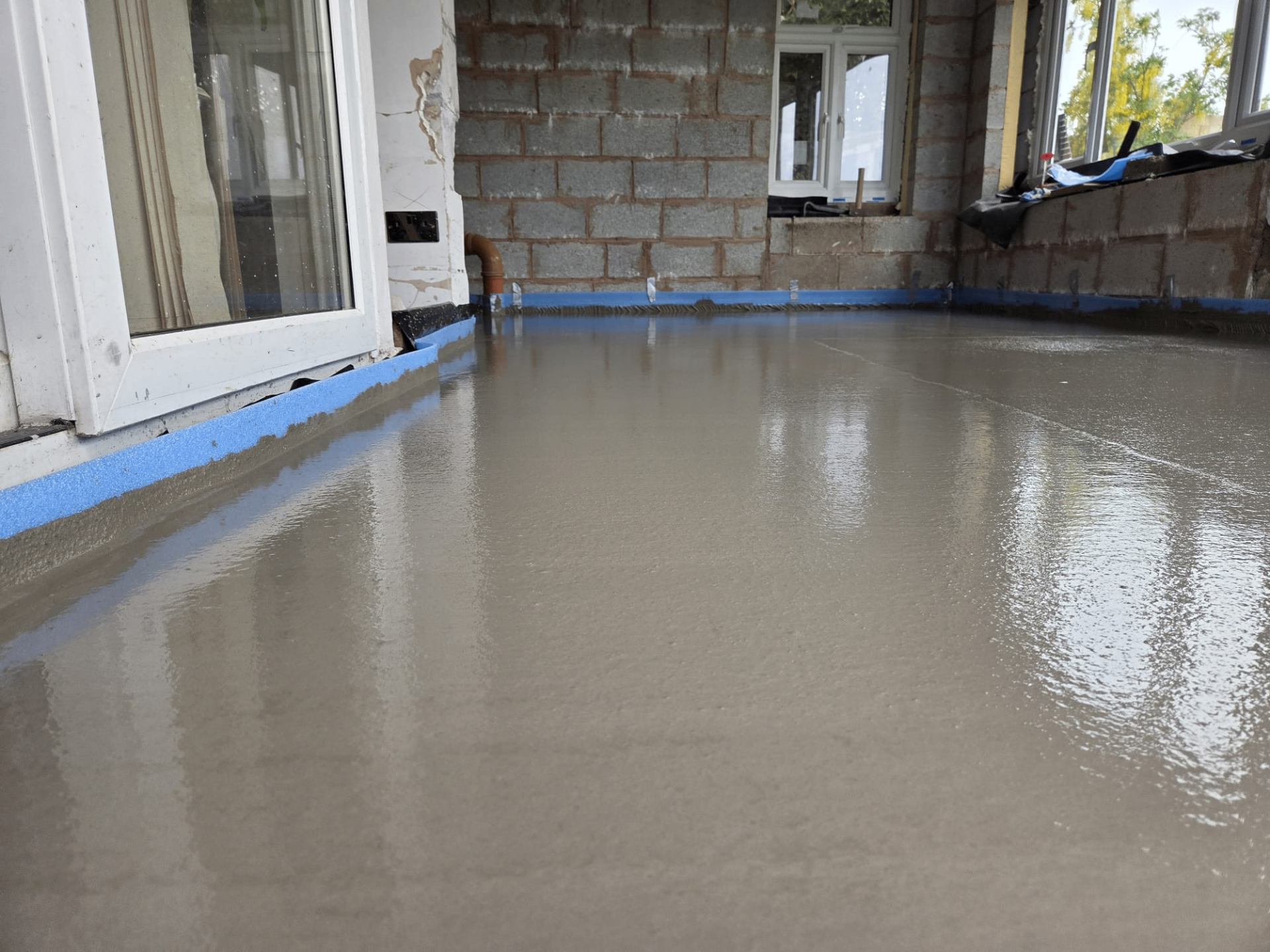
- 4Photographic records of the substrate condition before laying, and of the finished pour, are a low-cost way of capturing the state of the work at each stage.
- 5Any manufacturer technical representative site visits or advice given during the pour should be logged, particularly on larger or more complex jobs.
- 6Moisture test results, where specified, should be dated and referenced against the test method used, not just a single figure without context.
- 7Records should be handed over as part of the project's operation and maintenance documentation, not held only by the screeding contractor.
Want a QA clause added to your specification?
We can talk through what records are proportionate for your project's scale and complexity.
Or call our landline on 01392 237700
Quality assurance and site records — your questions
In short
A clear quality assurance clause sets out what records the screed contractor should provide, from batch and mix documentation to depth checks, so disputes later have an evidential basis.
Want a QA clause added to your specification?
We can talk through what records are proportionate for your project's scale and complexity.