Verification
Specifying Protection for Liquid Screed From Follow-On Trades
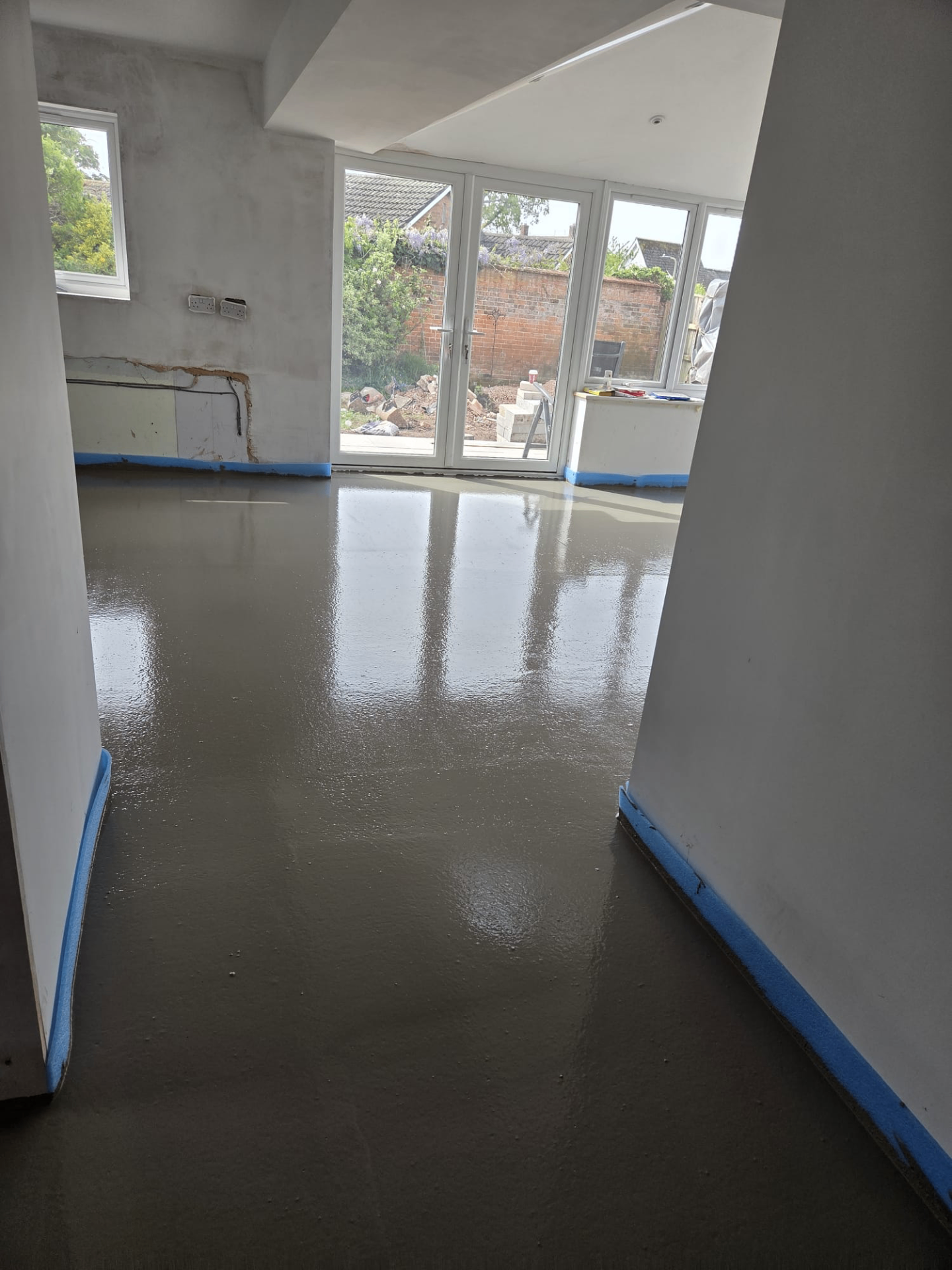
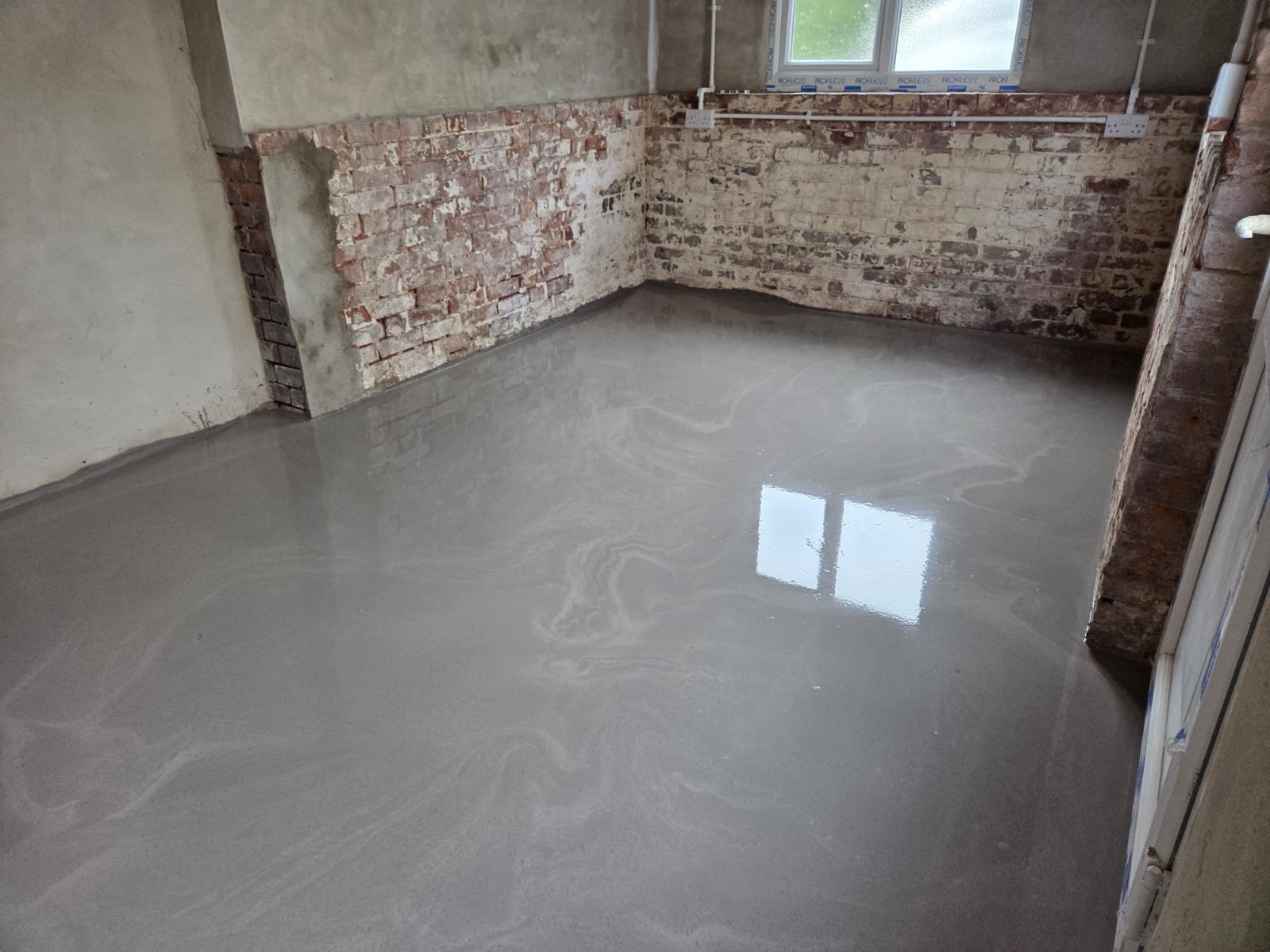
Protection specifications set out how a liquid screed is safeguarded from follow-on trades once poured, covering access, coverings and site sequencing.
Coordinating trades around a liquid screed pour?
We can advise on sequencing and protection for liquid screed projects across Exeter and the South West.
Or call our landline on 01392 237700
A liquid screed is at its most vulnerable in the weeks after pouring, when it is still curing and drying but the building programme often demands other trades continue working nearby. Without a clear protection specification, screed floors are routinely damaged by scaffold poles, tools, dropped materials or premature foot traffic.
Specifying protection means agreeing, in advance, how and when the floor will be covered, what access restrictions apply during curing, and who is responsible if damage occurs. This is a coordination issue as much as a technical one, and it belongs in the specification rather than being left to site discretion.
Because liquid screed relies on an unbroken surface for its performance, even apparently minor damage such as a puncture from a dropped tool can compromise a heating pipe or create a point of future weakness. Protection measures should therefore be proportionate to the risk posed by the trades following on.
What a protection specification should cover
A clear protection specification identifies the type of covering to be used, when it is to be installed relative to the pour, and how long it should remain in place. Breathable boards or sheeting are typically favoured over impermeable coverings that could trap moisture and slow drying.
It should also address point loading — trestles, ladders, scaffold towers and stacked materials can all create highly localised loads that a curing screed is not yet strong enough to resist. Load-spreading boards or exclusion of such loads should be specified where these risks are foreseeable.
Coordinating with the wider programme
Follow-on trades — particularly wet trades such as plastering or further concrete work — should be sequenced so they do not introduce water, debris or spillages onto the curing screed. Where sequencing cannot avoid this entirely, protection measures need to account for the specific contamination risk involved.
Responsibility for protection, and for making good any damage, should be set out clearly in the contract documents rather than left as an assumption between trades, since disputes over screed damage are far easier to resolve when responsibility was agreed upfront.
Snagging, thresholds and the point of practical completion
Door thresholds, service penetrations and floor-to-wall junctions are the areas most often marked up during snagging, since boarding and cutting-in work there is hardest to keep clean during the protected period.
Agreeing what counts as acceptable making good around these details before the pour keeps the final inspection about genuine damage rather than disputed opinion.
Protection & Trades — the points that decide it
- 1Protection should be specified before the pour, not improvised afterwards
- 2Breathable protection boards are commonly used to allow continued drying while guarding the surface
- 3Access restrictions during initial curing should be clearly communicated to all site trades
- 4Point loads from trestles, scaffold feet and stored materials should be avoided or spread with boards
- 5Wet trades working nearby should be sequenced to avoid water or contaminants reaching the screed
- 6Responsibility for protection and any damage should be agreed contractually, not assumed
- 7Protection measures should be removed and the floor inspected before floor finish works begin
Protection & Trades — your questions
Coordinating trades around a liquid screed pour?
We can advise on sequencing and protection for liquid screed projects across Exeter and the South West.
Or call our landline on 01392 237700
In short
Protection specifications set out how a liquid screed is safeguarded from follow-on trades once poured, covering access, coverings and site sequencing.
Coordinating trades around a liquid screed pour?
We can advise on sequencing and protection for liquid screed projects across Exeter and the South West.