Anhydrite screed defects
Shrinkage Cracks in an Anhydrite Screed Floor
Anhydrite screeds crack far less than sand-and-cement, but they're not immune — a small amount of fine shrinkage cracking during drying is normal, and knowing what's normal matters.
Get your crack pattern assessed
Name, phone, email — we'll reply the same working day with a fixed price.
Or call our landline on 01392 237700
One of the selling points of anhydrite (Gyvlon, Gypsol and similar) screeds is that they shrink less than traditional sand-and-cement, and they don't need bay joints across most residential floor areas. But 'less shrinkage' doesn't mean zero, and a small amount of fine surface cracking as the screed dries out is a genuinely normal part of the curing process for calcium-sulphate mixes.
The judgement call is telling normal shrinkage cracking apart from something that indicates a mix, depth or drying problem. That distinction matters, because one needs nothing more than a fill before flooring, and the other needs investigation.
This page sets out what we look for, and how we decide which category a given crack pattern falls into.
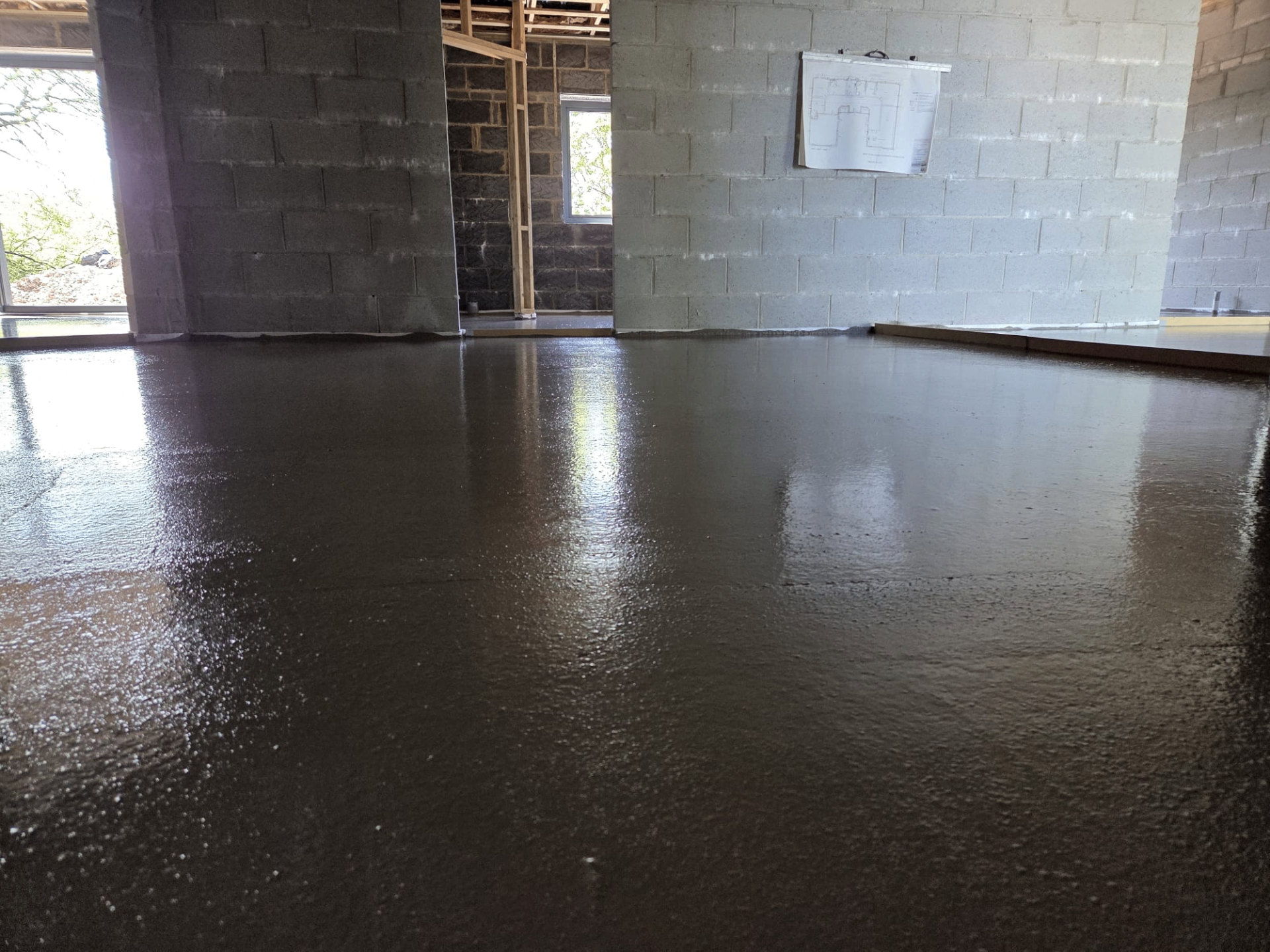
Normal vs concerning shrinkage cracking
| Feature | Assessment |
|---|---|
| Fine, random hairline pattern | Normal drying shrinkage |
| Crack follows a straight structural line (doorway, pipe run) | Investigate — may be a movement or cover issue |
| Crack widens noticeably at edges under load | Structural — needs assessment before covering |
| Cracking appears very early, within days of pour | Check pour depth, mix ratio and curing conditions |
| Cracking limited to surface, screed sounds solid when tapped | Normal — cosmetic fill is sufficient |
Factors that increase shrinkage cracking
- Screed poured too thick in a single lift without design allowance
- Rapid, uneven drying — direct sun, draughts or heat sources too early
- Incorrect water-to-mix ratio at batching
- Inadequate edge insulation allowing restraint against the perimeter
- UFH commissioned before the screed had cured sufficiently
Get your crack pattern assessed
Send photos of the cracking and we'll tell you whether it's normal shrinkage or needs a closer look before flooring goes down.
Or call our landline on 01392 237700
How we assess and repair
- 1
Sound the surface
Tapping either side of a crack tells us if there's any debonding beneath it.
- 2
Measure crack width and pattern
Fine, random hairlines get treated differently to a single wide structural crack.
- 3
Fill or rout as needed
Hairlines are typically filled directly; wider cracks are routed to a clean edge first.
- 4
Confirm before covering
We sign off that the floor is stable before any flooring goes down over it.
A few fine hairline cracks in an anhydrite floor after drying is completely normal and not something to worry about. A single wide crack in a straight line usually means something else is going on.
— Exeter Liquid Screeders
Shrinkage Cracks (Anhydrite) — questions we get asked
Keep reading across the site
Get your crack pattern assessed
Send photos of the cracking and we'll tell you whether it's normal shrinkage or needs a closer look before flooring goes down.