
Pour strategy compared
Single Pour vs Phased Pours for Liquid Screed
Liquid screed's big advantage is pouring large areas jointlessly in one go — but not every site or programme allows that, and phasing has its own logic.
Get your pour strategy planned properly
Name, phone, email — we'll reply the same working day with a fixed price.
Or call our landline on 01392 237700
One of liquid screed's headline benefits over sand-and-cement is the ability to pour hundreds of square metres in a single continuous session with no day joints. That's not always achievable, though — access, trade sequencing and build phasing can force the job into two or more separate pours.
Phased pours aren't a failure of planning; on larger or multi-stage builds they're often the sensible, deliberate choice. The key is knowing where the pour breaks go and how they're detailed, so the finished floor still performs as one system.
Here's how the two approaches compare in practice, and how we plan movement and construction joints when a single pour isn't possible.
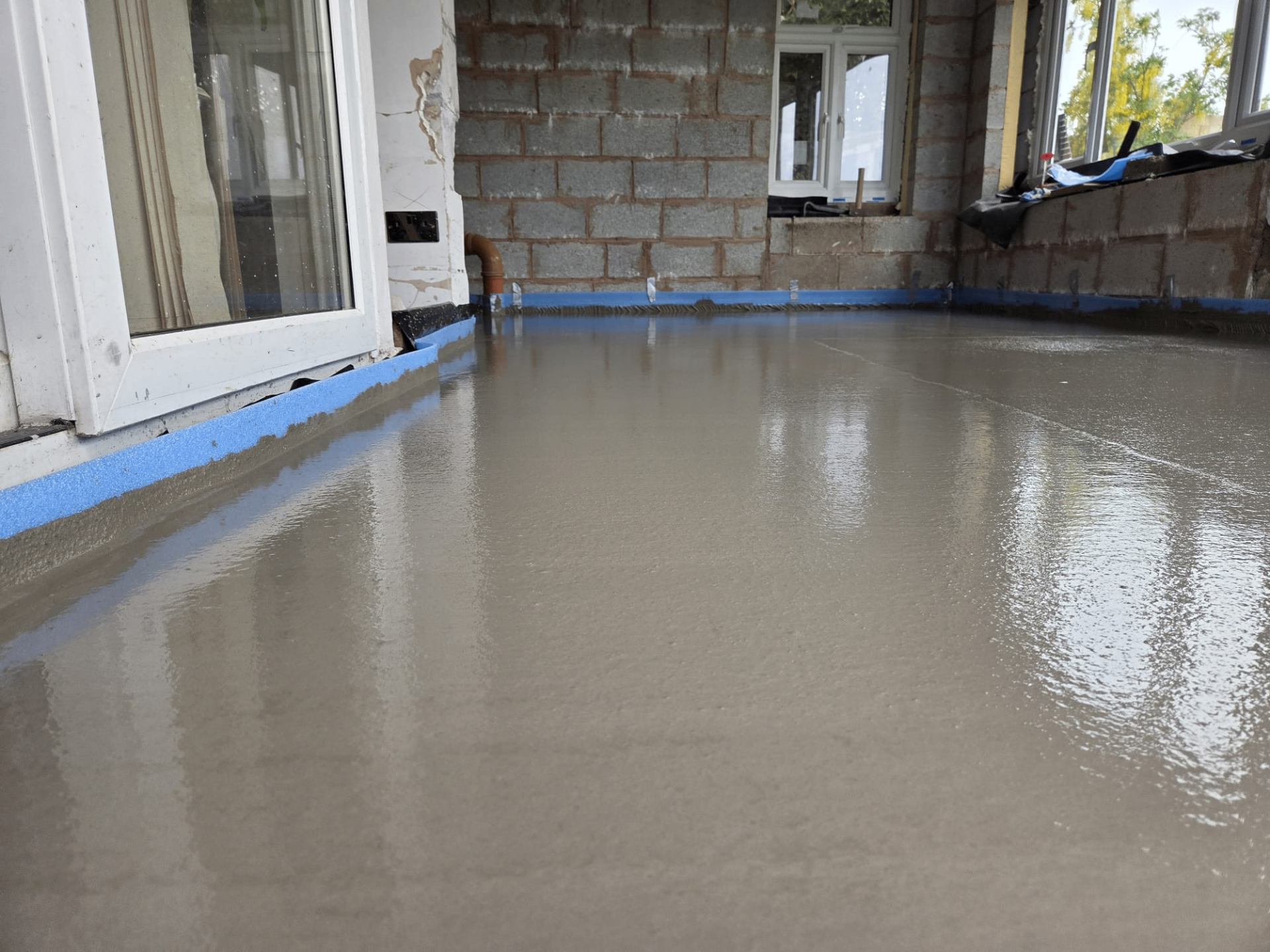
When a single pour is the right call
- Whole ground floor accessible in one visit with the pump on site
- Open-plan layout with no structural breaks
- Programme allows the whole area to reach the same readiness point together
- Client wants the flattest, most jointless finish achievable
When phased pours make more sense
- Large project being built in stages (e.g. extension before main house)
- Restricted access meaning the pump can't reach every area in one session
- Different rooms need different floor build-ups (e.g. wet room vs living space)
- Trades need partial handover of some areas before others are ready
Get your pour strategy planned properly
Share your build programme and floor plan and we'll recommend single or phased pours with a clear cost comparison.
Or call our landline on 01392 237700
Single pour vs phased pours
| Factor | Single pour vs phased |
|---|---|
| Joints | None vs planned movement/construction joints |
| Programme flexibility | Lower — needs whole area ready vs higher — can sequence by zone |
| Cost efficiency | Best per-m² rate vs slightly higher due to multiple mobilisations |
| Finish continuity | Fully continuous vs jointed but detailed correctly |
Single pour wins on cost and finish whenever the whole area is genuinely ready at once. Phased pours win when the build itself is phased — forcing a single pour onto a staged site usually just creates delay and abortive costs. Test it against your build programme, not your ideal finish.
— Exeter Liquid Screeders
Single Pour vs Phased Pours — questions we get asked
Keep reading across the site
Get your pour strategy planned properly
Share your build programme and floor plan and we'll recommend single or phased pours with a clear cost comparison.