
Building Types
Liquid Screed for Libraries and Civic Buildings
Libraries, museums and civic buildings place sustained, heavy static loads on the floor from shelving and archive storage, alongside a need for quiet, durable finishes that last for decades of public use.
Libraries and civic buildings are built to last, and their floors are expected to perform reliably for decades under conditions that differ significantly from typical commercial premises. Static shelving, whether standard library stacks or high-density mobile archive racking, applies sustained point loads to a floor that also has to carry footfall from the public, staff and, in many buildings, wheeled trolleys moving stock between floors. The screed beneath the finished floor has to be specified with these loads in mind from the outset, because retrofitting a floor to cope with heavier racking after installation is disruptive and costly.
Acoustic performance matters more in these buildings than in most commercial settings, since quiet is often part of the brief for reading rooms, study spaces and archive areas. Floor build-up, including any resilient or acoustic layers beneath the screed, contributes to how well footfall and general noise are controlled between floors, particularly in multi-storey civic buildings with mixed public and staff areas.
Many library and civic projects are refurbishments carried out in phases while parts of the building remain open, which brings practical constraints around dust, drying time, and working around the public and existing collections. Sequencing the screed works alongside the wider programme, and protecting completed areas from damage during ongoing construction, is often as important as the specification of the floor itself.
Shelving loads and point loading
Library shelving, particularly full-height stacks or high-density mobile racking used in archives, concentrates significant weight onto relatively small floor areas compared with open-plan office or retail loading. The screed and its supporting structure need to be assessed together against the actual racking layout, since moving a shelving run after the floor is finished is far more disruptive than accounting for it at the design stage.
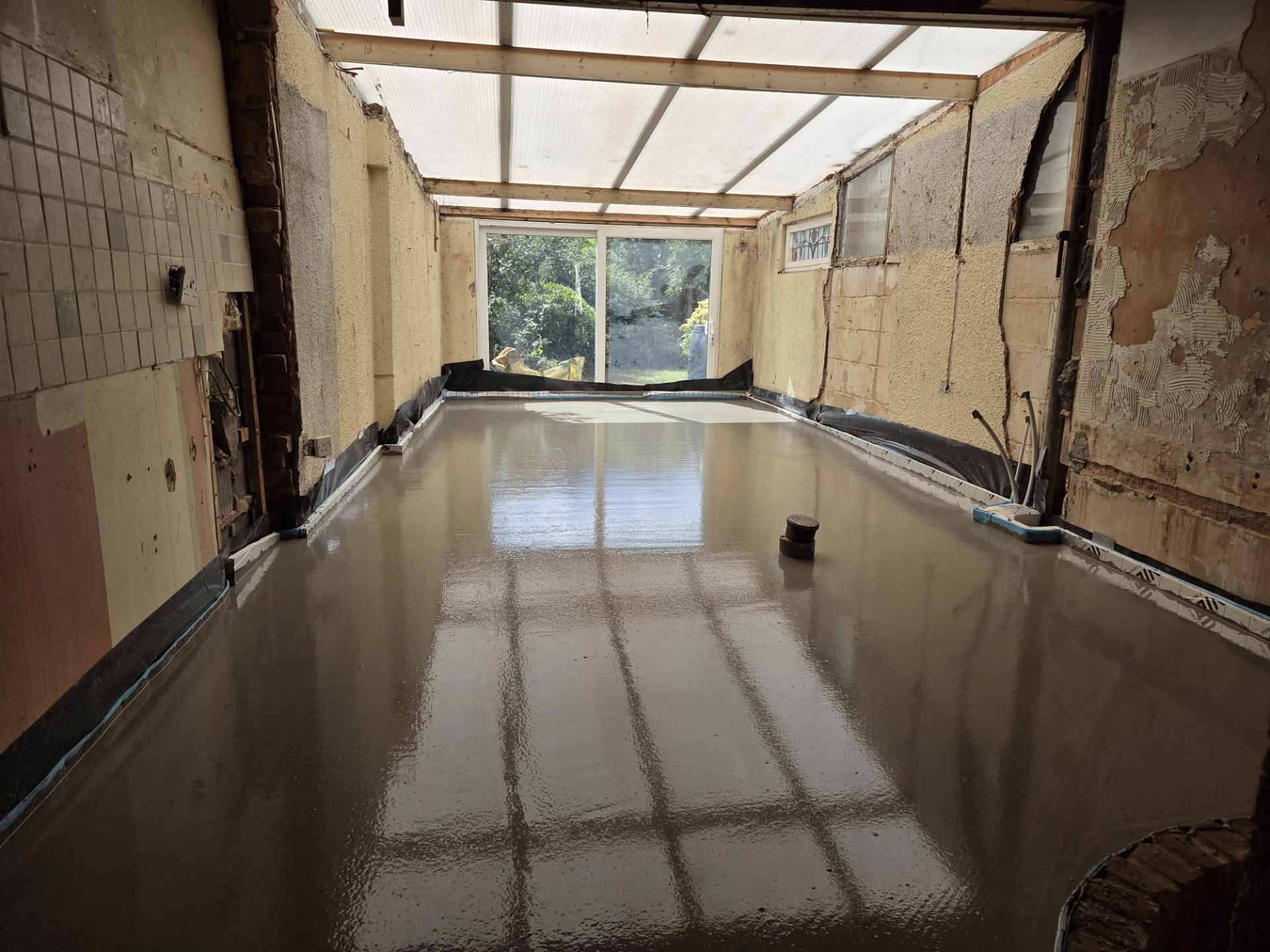
Mobile racking systems, which run on rails to maximise storage density, add a further consideration because the rails themselves need a flat, accurately level base to run smoothly, and the loads they carry when fully laden with archive material can be considerable. A liquid screed's ability to achieve a consistent, level surface across large floor areas helps these systems operate correctly over the long term.
Acoustics and long service life
Quiet is part of the functional brief in reading rooms, study areas and archives, and the floor build-up plays a role in that alongside wall and ceiling treatments. Where an acoustic resilient layer is specified beneath a screed to reduce impact sound transmission between floors, the screed still needs to bond and cure correctly on top of it to avoid cracking or drumming underfoot over time.
Civic buildings are typically designed with a long service life in mind, often several decades, so the floor build-up needs to support finishes that will be walked on continuously by staff, visitors and trolleys without early failure. A well-specified and properly cured screed gives later flooring, whether carpet tile, vinyl or hard flooring in circulation areas, a stable base that reduces the risk of problems appearing years after completion.
Phased works in occupied public buildings
Many library and civic refurbishments happen in stages so that some areas can remain open to the public while others are under construction. This affects how the screed works are sequenced, since dust, noise and drying areas need to be contained away from occupied parts of the building, and completed floors need protecting from following trades and public access before finishes are installed.
Coordinating drying times with the wider programme is particularly important in phased projects, since a screed that has not dried sufficiently before a moisture-sensitive floor covering is laid can cause problems that are difficult to resolve once the area has reopened to the public.
Fire safety and regulatory context
Civic buildings are usually subject to more detailed fire safety strategies than a typical commercial unit, reflecting their public occupancy and, in many cases, listed or historically significant fabric, and any pipework or containment passing through a compartment floor needs fire-stopping detailed and agreed before the screed is poured over it.
Where plant rooms, archive stores or basement levels sit beneath public areas, compartmentation between these spaces and the areas above is usually a specific design requirement, and the floor build-up in these zones should be checked against the building's fire strategy rather than specified purely on loading and finish grounds.
Maintenance and future adaptability
Civic buildings often go through several rounds of internal reconfiguration over their working life as services change, collections grow, or public space is reallocated, so a durable, well-documented screed build-up gives facilities teams a stable base to work from when floor coverings or shelving layouts are eventually altered.
Recording the location of underfloor heating pipework, service penetrations and any acoustic layers at construction stage is particularly valuable in these long-life public buildings, since the original installation team is rarely still involved by the time a future refurbishment or maintenance project is planned.
Libraries & Civic Buildings — the points that decide it
- Floor build-up specified to carry sustained point loads from static and mobile shelving
- Consideration of high-density archive racking where loads are concentrated further
- Acoustic layers where quiet reading rooms or study areas sit above other spaces
- Durable, long-life finishes suited to decades of continuous public use
- Compatibility with underfloor heating in civic buildings seeking efficient heating
- Phased sequencing to allow works around occupied areas and public opening hours
- Protection of finished floors during ongoing construction phases
- Level, stable substrate to support flooring in exhibition and display areas
- Fire compartmentation maintained through any service penetrations serving archive or plant rooms
- Moisture testing ahead of laying moisture-sensitive flooring in occupied heritage collections areas
Specifying a floor for a library or civic building?
Speak to us about screed specification for shelving loads, acoustics and phased public building works.
Or call our landline on 01392 237700
Libraries & Civic Buildings — your questions
Next, people usually look at
Building types & floor performance
Building types & floor performance
Depths & specification
Depths & specification
Project types
Project types
Process & decision guides
Process & decision guides
Building types & floor performance
Converted chapels and barns
Building types & floor performance
Coastal properties
In short
Libraries, museums and civic buildings place sustained, heavy static loads on the floor from shelving and archive storage, alongside a need for quiet, durable finishes that last for decades of public use.
Specifying a floor for a library or civic building?
Speak to us about screed specification for shelving loads, acoustics and phased public building works.