
Drying
Planning the Screed Drying Programme
Drying time is the one part of the screed process you can genuinely plan around weeks in advance — as long as you know the variables.
Plan your drying programme
Name, phone, email — we'll reply the same working day with a fixed price.
Unlike the pour itself, which happens in hours, drying is measured in days to weeks, and it's the part of the process most likely to affect your wider build programme. Get the drying window wrong in your planning and every trade booked after it — flooring, kitchen fitters, final decoration — can end up waiting.
The good news is that drying time is reasonably predictable once you know the screed type, depth and typical ambient conditions on site, which means it can be planned into your programme with real confidence rather than left as a vague guess.
This page covers how to plan the drying window; for the actual testing that confirms it's dry, see our screed testing and handover page.
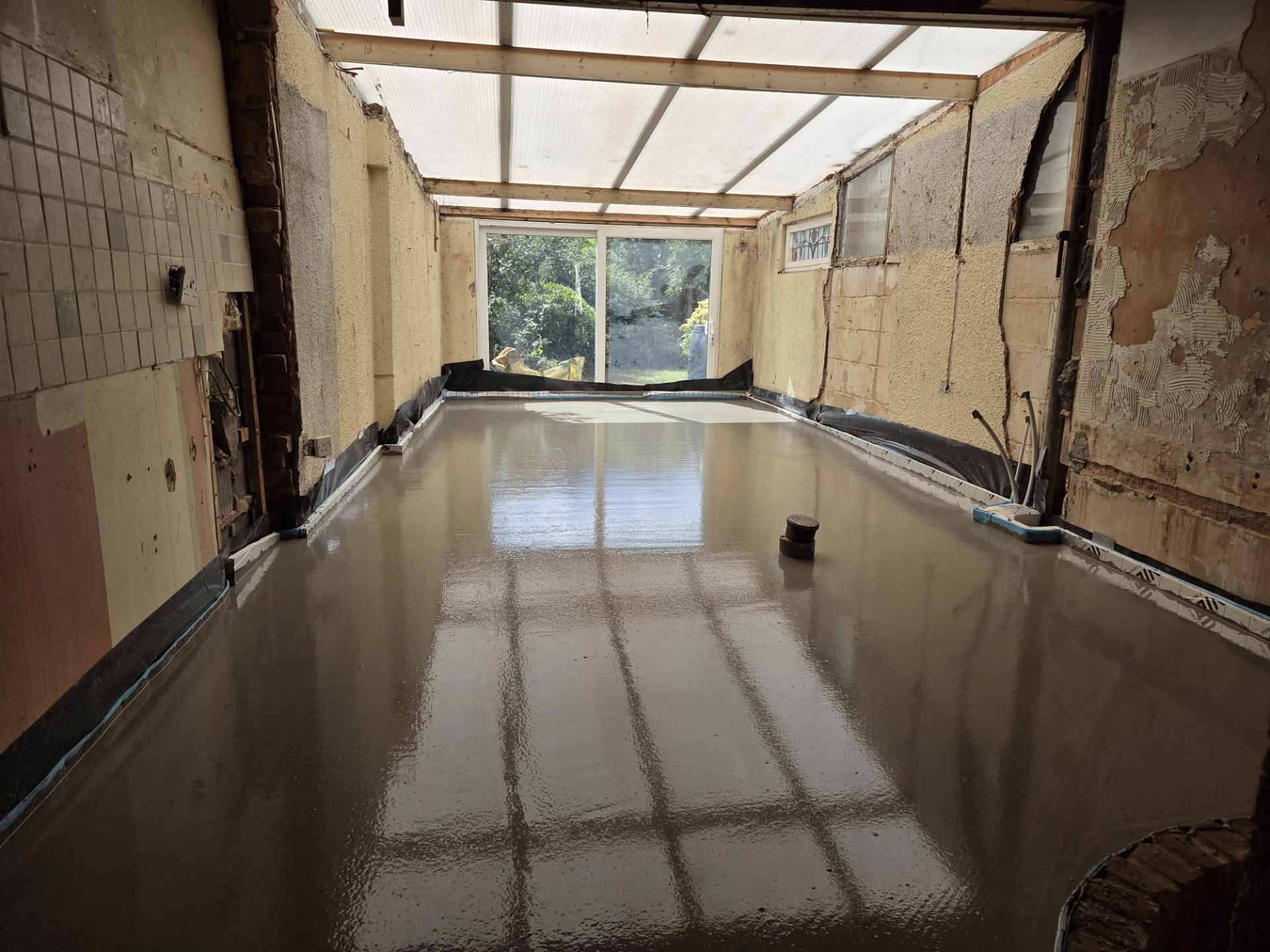
What drying time depends on
- Screed type — cement-based (Cemfloor) generally dries faster than calcium-sulphate (anhydrite) at comparable depths
- Depth — thicker pours take proportionally longer to dry throughout
- Ambient temperature and ventilation — cold, damp or sealed-up sites dry more slowly
- Whether the building is weathertight — an open building loses drying control to the weather
Rough drying guidance (indicative, always confirmed by testing)
| Screed type / depth | Rough drying guide |
|---|---|
| Cemfloor, 50mm | Often ready for floor coverings within a few weeks in good conditions |
| Anhydrite, 50mm | Typically a longer programme, plus a laitance-sanding step before covering |
| Deeper pours (65mm+) | Add meaningfully more time — drying isn't linear with depth |
| Cold or poorly ventilated site | Can extend any of the above significantly |
Building drying time into your wider programme
The safest approach is to treat the drying period as a fixed block in your programme from day one, rather than assuming it can be compressed later. Trades that rely on a dry floor — tiling, engineered wood, resin flooring — should be booked against a confirmed test result, not an assumed calendar date.
If your programme is tight, talk to us early: ventilation, dehumidification and mix selection can all be used to manage drying time within realistic limits, but none of them make a genuinely wet screed safe to cover.
Plan your drying programme
Tell us your screed type, depth and target flooring date and we'll help you plan a realistic drying window.
We'll help you plan the fastest realistic drying programme, but we won't sign off a floor as dry before it actually is — that protects your finished floor, not just our name.
— Exeter Liquid Screeders
Drying Programme Planning — questions we get asked
More on costs and planning
Keep reading across the site
Plan your drying programme
Tell us your screed type, depth and target flooring date and we'll help you plan a realistic drying window.