
Cold-weather planning
Winter pour resilience for Stoke Canon sites
Stoke Canon sites planning a winter pour need to think about temperature limits on the day and after it, and have a fallback date ready if conditions turn.
Stoke Canon sits inland along the Exe valley, where winter mornings can bring frost that lingers in low-lying and exposed spots longer than in more built-up parts of Exeter. For a liquid screed pour, temperature matters both during placement and for the days that follow while the floor cures, so a winter build here benefits from planning around the weather rather than treating it as a fixed date regardless of conditions.
Liquid screed has a minimum temperature range for both application and early curing, and pouring into a cold, unheated building or allowing a fresh floor to freeze in the following days can affect how it cures and performs. On rural sites without services connected yet, keeping the building above the necessary minimum overnight is not automatic — it needs a heat source arranged and running before the pour, not switched on afterwards.
Because a frosty morning can change plans at short notice, it is worth going into a winter pour with an agreed fallback: a realistic secondary date, and a shared understanding of what conditions would trigger moving to it. That takes the last-minute decision-making out of a cold morning when the wagon is already booked.
Stoke Canon — the points that decide it
- Inland, low-lying stretches of the Exe valley can hold frost longer than built-up areas
- Liquid screed has minimum temperature limits for both pouring and early cure
- Unheated buildings need a heat source running before the pour, not after
- Freezing in the days after a pour can affect how the floor cures
- A fallback pour date should be agreed before committing to a winter booking
- Ventilation still needs managing even when heating a cold building
- Building enclosure (windows, doors) affects how well heat is retained overnight
- Materials and equipment stored on site overnight should also be kept above freezing where practical
- Early morning starts in winter can mean working through the coldest part of the day, which affects crew planning too
- Insulation beneath a warm floor build-up needs to be dry and protected from frost before the pour
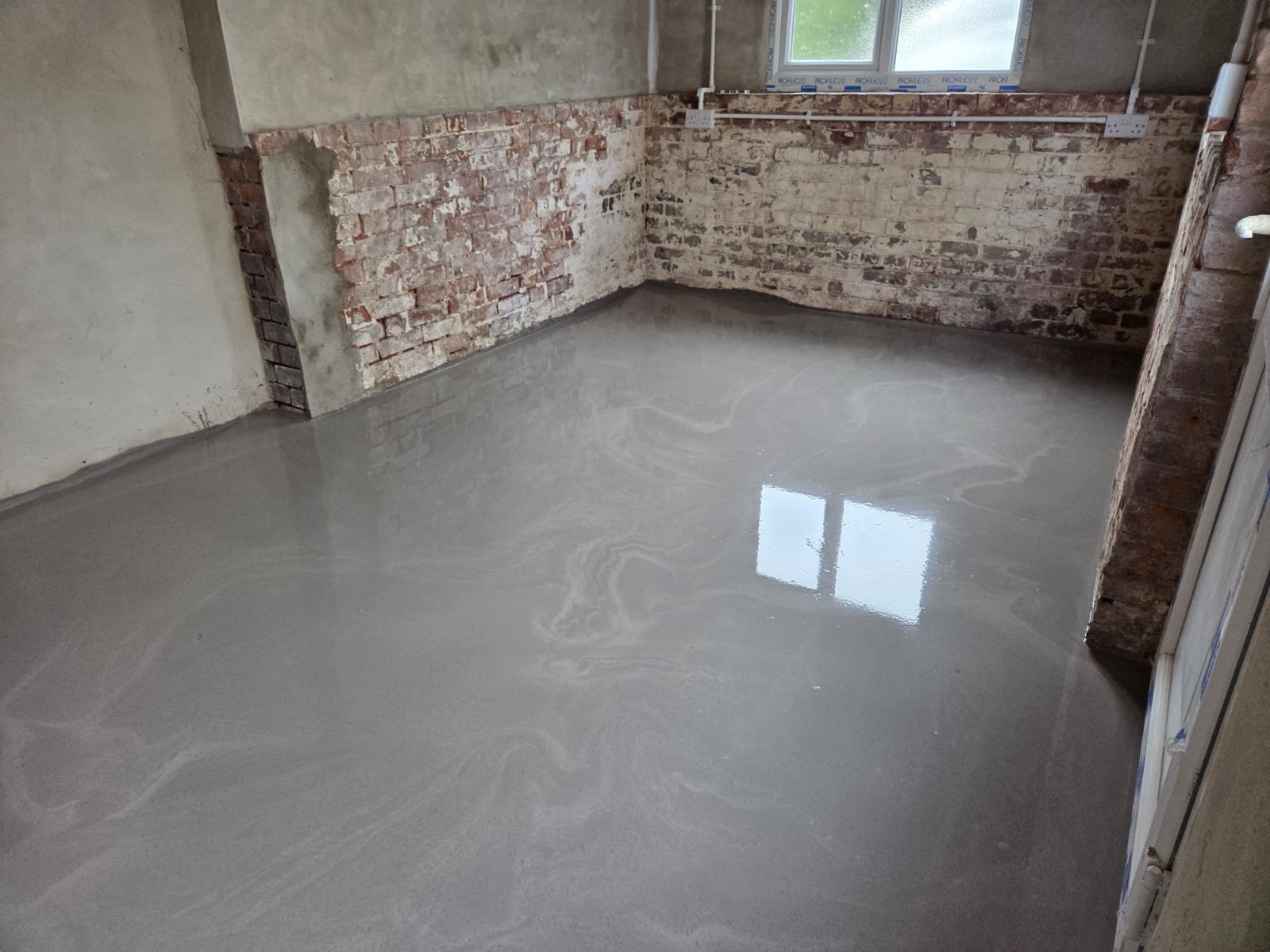
Reference points for stoke canon
| Minimum ambient temperature for pouring | Generally above freezing, ideally warmer |
|---|---|
| Heating lead time before pour | Running well ahead of pour day, not switched on after |
| Post-pour frost protection | Maintained for several days minimum |
| Fallback date | Agreed in advance for winter bookings |
Temperature limits for pouring and curing
Liquid screed needs to be placed and allowed to begin curing within a temperature range that keeps the mix chemistry working as intended. Pouring into a very cold slab or leaving a fresh floor exposed to frost in the days immediately after can interfere with that process, so temperature is a genuine go/no-go factor for a winter date, not just a comfort consideration for the crew.
On a site like Stoke Canon where cold pockets can persist into the morning in sheltered or low-lying positions, checking forecast minimums for both the pour day and the following nights is part of confirming the date is workable.
Heating a building before the pour, not after
Where a building has no permanent heating connected yet, temporary heating needs to be running well ahead of the pour so the slab and surrounding air are within range when the screed goes down, rather than switched on afterwards and expected to catch up. This is particularly relevant on new-build or renovation shells that have not yet had services connected.
Heating also needs to be managed alongside ventilation, since a sealed, heated space with no air movement can trap excess moisture near the surface, so the two need balancing rather than treating heating alone as the fix.
Keeping a realistic fallback date
Frost forecasts can shift close to the date, and a pour that looked workable a week out can become marginal on the morning. Agreeing a secondary date in advance, along with a clear understanding of what conditions would trigger using it, avoids the pressure of trying to force a pour through on a morning that is not suitable.
This is a more practical approach on rural winter sites than assuming a single fixed date will always go ahead regardless of what the week's weather actually does.
Insulation and floor build-up in cold weather
Where a screed floor sits over insulation as part of a warm floor build-up, the insulation itself needs to be dry and at a reasonable temperature before the pour, since cold, damp insulation beneath a fresh screed can slow curing in the layers immediately above it. Checking that insulation boards have been kept covered and out of standing water during a wet or frosty spell before the pour is worth confirming rather than assuming.
This matters particularly on a rural Stoke Canon shell that has been open to the weather for some time before the floor stage is reached, where insulation delivered and stored on site well ahead of the pour date can pick up moisture if it has not been kept properly protected.
Practical steps on the day of a cold pour
On a winter pour date, the working day often starts in the coldest part of the morning, particularly on an inland site like Stoke Canon where frost can linger. Building this into the plan means allowing extra time for the site to reach a workable temperature before the pour begins, rather than assuming the same start time as a summer job will be equally efficient.
It is also worth checking that bagged additives, primers or any other materials stored on site overnight have not themselves been affected by freezing conditions, since some products have their own minimum storage temperature that is easy to overlook when the focus is on the floor itself.
In short
Stoke Canon sites planning a winter pour need to think about temperature limits on the day and after it, and have a fallback date ready if conditions turn.
Planning a winter pour near Stoke Canon
Tell us about the site's heating, enclosure and planned start time, and we can plan temperature management and a fallback date around it.
Or call our landline on 01392 237700
Stoke Canon — your questions
Planning a winter pour near Stoke Canon
Tell us about the site's heating, enclosure and planned start time, and we can plan temperature management and a fallback date around it.